Leave Your Message

2026 Top CNC Gantry Machines for Global Buyers

Global buyers are entering a more demanding CNC equipment market. Grand View Research valued the global CNC machine market at approximately USD 83.8 billion in 2023. Its forecast also indicates strong growth through 2030. MarketsandMarkets reports similar momentum, driven by aerospace, automotive, energy, and large-format fabrication. These figures matter, but they do not tell the whole purchasing story.

A Cnc Gantry machine must perform beyond a catalog specification. Buyers should examine working envelope, spindle power, positioning accuracy, thermal stability, control compatibility, and after-sales support. Imagine machining a five-meter aluminum frame. Small alignment errors can become visible across its full length. Gene Haas, founder of Haas Automation, expressed a practical manufacturing principle: “Our goal has always been to build high-quality machine tools at affordable prices.” That principle remains relevant for global purchasers comparing value, reliability, and lifecycle cost.

This guide reviews leading Cnc Gantry machines for international buyers in 2026. It considers real workshop demands, not only impressive brochures. Some market forecasts disagree, and advertised accuracy may depend on testing conditions. That deserves attention. A machine can look excellent on paper yet struggle with dust, vibration, poor training, or inconsistent maintenance. Regional voltage, spare-parts access, software support, and operator skill also influence results. The strongest choice is rarely the cheapest option. It is the machine that remains predictable after months of production.
2026 Top CNC Gantry Machines for Global Buyers

What Is a CNC Gantry Machine and How Does It Work?

What Is a CNC Gantry Machine and How Does It Work?

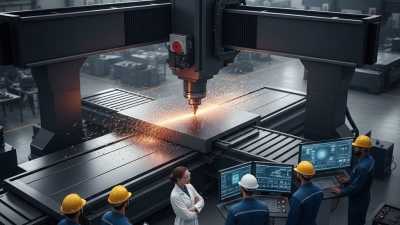
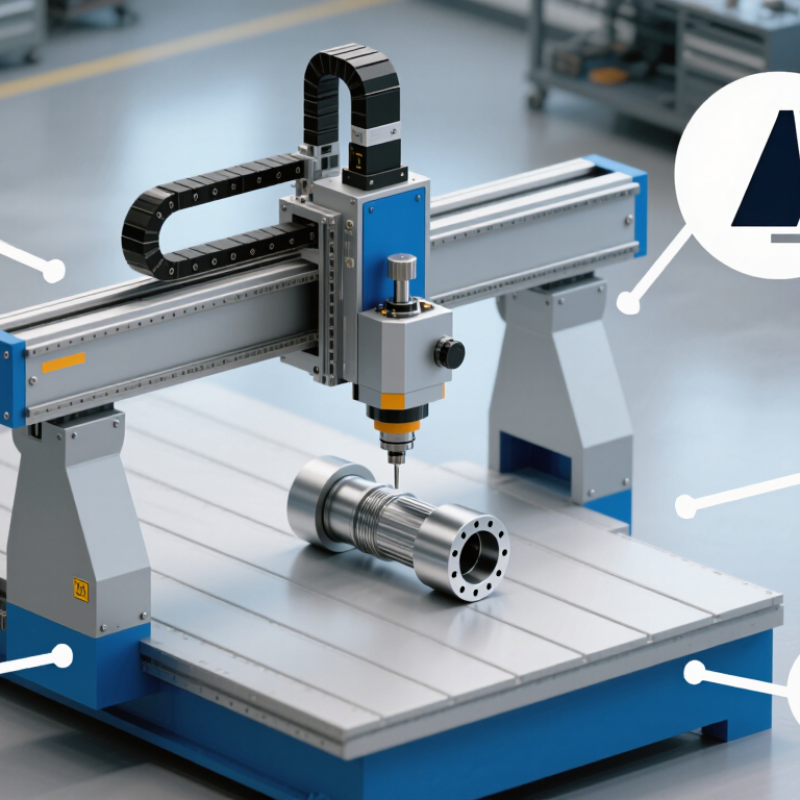
A CNC gantry machine uses a bridge-like frame to move cutting tools across large workpieces. Its gantry travels along guide rails, while the spindle moves vertically and laterally. A controller converts digital toolpaths into coordinated motor movements. The result is repeatable milling, drilling, routing, or cutting. It feels almost like watching a metal bridge glide over a workbench.

According to Grand View Research’s 2024 analysis, the global CNC machine market was valued at approximately USD 83.8 billion in 2023. The report also forecasts strong growth through 2030. This demand reflects tighter production requirements and wider automation adoption. The International Federation of Robotics reported 541,302 industrial robot installations worldwide in 2023. Gantry systems support that broader shift, especially in aerospace parts, fabricated structures, panels, and heavy molds.

Machine behavior depends on more than travel size. Frame stiffness, rail alignment, spindle power, acceleration, and table support affect real accuracy. A rigid gantry can reduce vibration when cutting steel, but excessive weight may limit speed.

Software quality matters too. One incorrect tool offset can ruin an expensive plate. That is the uncomfortable part. A polished specification sheet may still hide poor installation or weak maintenance practices. Buyers should inspect test cuts, calibration records, service response, and operator training before comparing prices. Productivity is not guaranteed by size alone.

Key Machine Types and Configurations for Different Industries

2026 Top CNC Gantry Machines for Global Buyers

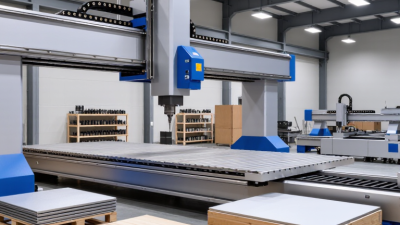
Global buyers should match the gantry design to the workpiece, not only the advertised table size. A fixed-gantry machine with a moving table suits precise metal components and stable batch production. A moving-gantry model handles oversized plates, beams, and panels more efficiently. Three-axis systems support flat cutting and drilling. Five-axis configurations reach angled surfaces with fewer setups. That can reduce alignment errors.

Industry requirements shape the ideal configuration. Aerospace workshops often need high-speed spindles, thermal control, and probing systems for aluminum structures. Automotive suppliers may prefer a wide working area, automatic tool changing, and rotary-axis compatibility. Construction equipment producers usually require rigid frames, high-torque spindles, and reinforced beds for heavy steel cutting. Furniture and panel manufacturers benefit from vacuum tables, dust extraction, and fast tool changes. Stone processing needs water management and corrosion-resistant components.

Real shop conditions matter. A machine can look powerful on paper yet struggle with heat, vibration, or limited floor access. Check spindle duty cycles, positioning accuracy, service response, and operator training before purchase. Leave space for loading, maintenance, and chip removal. Small details matter. In practice, buyers sometimes choose excessive travel dimensions and lose valuable accuracy. The better decision may be a smaller, stiffer machine with suitable automation. No configuration is perfect. Reassess the material, production volume, and future tooling plans before approving the final specification.

Essential Specifications for Comparing CNC Gantry Machines

For global buyers comparing CNC gantry machines, specifications should match production needs, not brochure size. Measure the work envelope carefully. A 1300 x 2500 mm table may offer less usable cutting space after fixtures and margins. Check gantry clearance too, especially for thick panels or raised workpieces. Spindle power, speed range, and cooling determine suitable materials. Wood, plastics, aluminum, and composites can require different configurations.

Tips: Request a test-cut video using your material. Ask for positioning accuracy, repeatability, and calibration records. A small resolution number does not guarantee clean edges. I once focused too much on table size and underestimated frame rigidity. That mistake increased vibration and finishing time. Look for a welded or machined structure, supported linear rails, and ball screws or rack drives suited to the machine’s travel length. Dust extraction and enclosure design also affect daily reliability.

Confirm controller compatibility, power requirements, delivery access, and operator training before purchase. Ask how replacement parts are sourced in your region. Technical support should provide clear manuals, response times, and maintenance guidance. Review the warranty terms carefully, including spindle and drive components. Buyers should also compare emergency stops, guarding, grounding, and electrical compliance for the destination country. A machine may appear affordable, yet installation, tooling, and freight can change its real cost.

Top CNC Gantry Machine Options for Global Buyers in 2026

In 2026, global buyers are comparing CNC gantry machine options by workload, floor space, and service access. A moving-gantry model suits wide panels and long aluminum profiles. Its table stays fixed while the bridge travels across the workpiece. This layout can reduce loading effort, but rail alignment demands careful installation. A fixed-gantry machine offers strong cutting stability for steel plates, molds, and dense composites. It usually needs more surrounding space.

For general fabrication, a three-axis configuration may provide the best value. Buyers cutting angled pockets or complex surfaces should examine five-axis options. However, extra axes add software training, calibration work, and maintenance costs. Do not select them only for a higher specification sheet. Check spindle power, working envelope, rapid speed, positioning accuracy, and chip removal. Ask for test cuts using your actual material and thickness. A 2,000-by-4,000-millimeter table may sound large, yet it cannot replace proper fixturing.

Reliable international purchasing also depends on documentation and support. Request electrical requirements, installation drawings, spare-parts lists, and acceptance-test procedures before payment. Confirm local safety compliance and trained technician availability. Remote guidance helps, but it cannot fix every alignment problem. That is where projects often stall. Build a realistic five-year service budget, not only the purchase price. One weakness remains common: published accuracy may reflect ideal laboratory conditions. Independent verification at your facility is wiser.

2026 Top CNC Gantry Machines for Global Buyers

Top CNC Gantry Machine Options for Global Buyers in 2026

The chart compares commonly specified spindle-power ranges across major CNC gantry machine configurations. Compact models are suited to light fabrication, while heavy-duty and extra-large systems are designed for high material-removal rates and large workpieces. Actual specifications vary by machine configuration, tooling, material, and application.

How to Choose, Source, and Maintain the Right Machine Worldwide

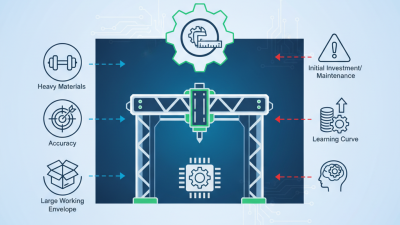
Choosing a top CNC gantry machine in 2026 starts with the workpiece, not the advertised horsepower. Define material, maximum dimensions, tolerance, production volume, and available floor space. Small details matter. A rigid frame reduces vibration during long aluminum cuts, while a suitable spindle prevents overheating on dense wood or composites. Confirm travel limits, table design, dust control, electrical input, and software compatibility before comparing prices.

Global sourcing requires practical verification. Request a complete specification sheet, machine weight, packing dimensions, warranty terms, and installation requirements. Ask for a recorded cutting test using material similar to yours. Check whether remote diagnostics, spare parts, and trained technicians are available in your region. Review destination-market safety rules, electrical standards, import documents, and delivery responsibilities. A low purchase price can become expensive after crating, taxes, training, and delayed replacement parts.

Maintenance should be planned before the machine arrives. Keep records. Inspect linear rails, ballscrews, belts, filters, and cable carriers on a fixed schedule. Remove chips daily, lubricate according to the manual, and check gantry squareness after relocation. Calibrate tool length and table alignment when accuracy changes. I have learned that operators often blame software for mechanical wear. Sometimes they are right, but not always. An overlooked loose fastener can create visible defects within hours. Build a simple maintenance log, train more than one operator, and reserve time for unexpected adjustments. A perfect plan still needs revision.