Understanding the Advantages of Cnc Gantry in Modern China Top Industries?
Cnc Gantry systems have transformed modern manufacturing in China, enhancing efficiency across various industries. According to a report by the China Machinery Industry Federation, advanced manufacturing technologies like Cnc Gantry are driving an annual growth rate of over 8% in the sector. These systems excel in tasks requiring precision and speed, making them vital in automotive, aerospace, and electronics production.
The flexibility of Cnc Gantry technology enables manufacturers to adapt quickly to changing demands. Insights from industry analysis reveal that companies using Cnc Gantry machines report a 30% reduction in production time. However, the high initial investment and maintenance challenges can be daunting for smaller enterprises. This raises valid concerns about accessibility and long-term sustainability.
Despite these challenges, the advantages of Cnc Gantry are undeniable. Their ability to deliver high-quality results consistently makes them indispensable. Yet, potential users must weigh the trade-offs. As the industry continues to evolve, understanding these dynamics becomes crucial for businesses looking to leverage Cnc Gantry systems.
Advantages of CNC Gantry Systems in Manufacturing Efficiency
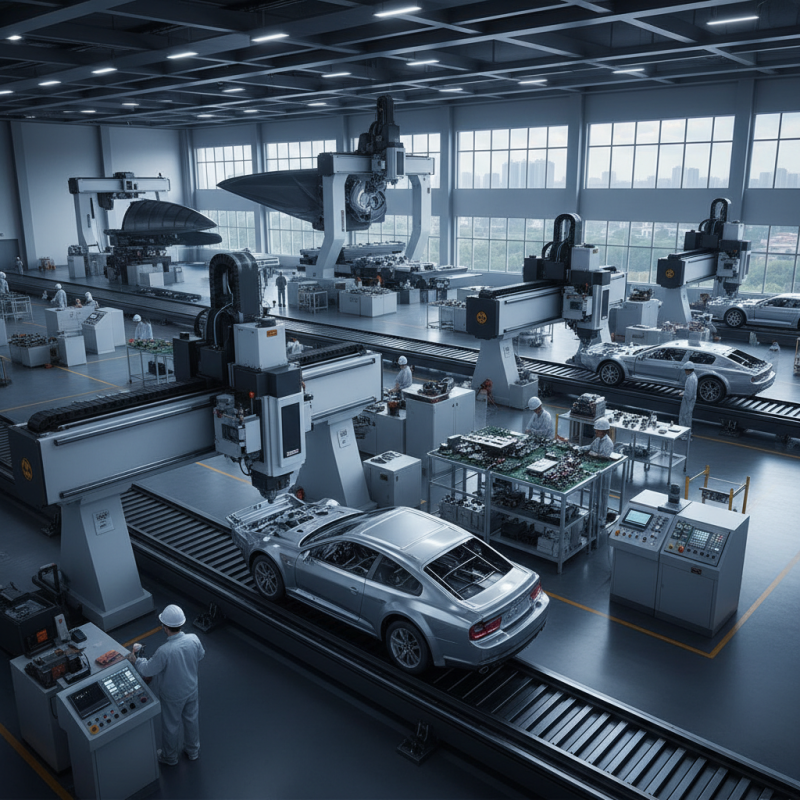
CNC gantry systems play a crucial role in enhancing manufacturing efficiency across various industries in modern China. These systems can significantly improve precision and speed. According to a report from the China Machinery Industry Federation, implementing CNC gantry machines can increase production rates by 30-50%. Such efficiency is vital in a market that demands speed and quality.
The design of CNC gantry systems allows for the simultaneous operation of multiple axes. This capability reduces the time required for complex machining tasks. In industries like aerospace and automotive, where precision is non-negotiable, this efficiency becomes essential. For instance, studies show that manufacturers using CNC gantry systems report an 80% reduction in setup time. This advancement enables quicker turnarounds and better responsiveness to market changes.
However, challenges exist. High initial investment costs can deter smaller manufacturers. Furthermore, the complexity of operation may require skilled technicians. This makes training a critical factor in successful implementation. While CNC gantry systems offer remarkable benefits, companies must weigh these against their current capabilities and resources. Balancing investment and operational needs can be a delicate task.
Precision and Accuracy: Key Benefits of CNC Gantry Machines
CNC gantry machines are revolutionizing modern industries in China. Their design allows for impressive precision and accuracy. This capability is crucial for industries like aerospace, automotive, and electronics. With intricate designs and tight tolerances, manufacturers rely on CNC gantry systems to meet their specifications.
In practice, the precision of CNC gantry machines minimizes errors. Even slight deviations can lead to significant issues. This technology reduces material waste and optimizes production efficiency. Furthermore, the ability to handle large components is a game-changer. It brings efficiency to large-scale projects that require high accuracy.
However, relying heavily on CNC gantry machines can pose challenges. For instance, calibration is key; improper setup can compromise accuracy. Continuous training is vital for operators to maintain expertise. While this technology brings many advantages, staying mindful of these complexities is important for sustained success in industry practices.
Understanding the Advantages of CNC Gantry in Modern China's Top Industries
| Industry |
Key Benefits |
Precision Level |
Typical Applications |
| Aerospace |
High precision and reduced waste |
±0.01 mm |
Component manufacturing |
| Automotive |
Consistency and automation |
±0.02 mm |
Chassis fabrication |
| Electronics |
Rapid prototyping and detailed engraving |
±0.005 mm |
Circuit boards and enclosures |
| Construction |
Large part machining and efficiency |
±0.1 mm |
Structural components |
| Energy |
Durability and precision for tough materials |
±0.05 mm |
Turbine and rotor manufacturing |
Cost-Effectiveness of CNC Gantry in Production Processes
CNC gantry systems have surged in popularity within China's manufacturing sector. Their use in production processes is becoming increasingly significant. These machines offer remarkable cost-effectiveness. Companies can achieve high precision at a fraction of traditional machining costs. This is vital in a market where margins are tight.
The benefits of CNC gantry are evident in various applications. For instance, they excel in large-scale component production. These machines can handle heavy and complex parts with ease. However, the initial investment can be daunting for smaller enterprises. Not all companies can afford upgraded technology right away. This raises questions about long-term sustainability and strategic planning.
Furthermore, the operation of CNC gantry systems requires skilled labor. Training staff adds to the overall expense. Some businesses report challenges in maintaining consistency in output quality. These factors can lead to hesitance in adoption. Despite these concerns, the benefits often outweigh the drawbacks. Optimizing production processes seems essential in a competitive landscape.
The Role of CNC Gantry in Enhancing Automation in China’s Industry
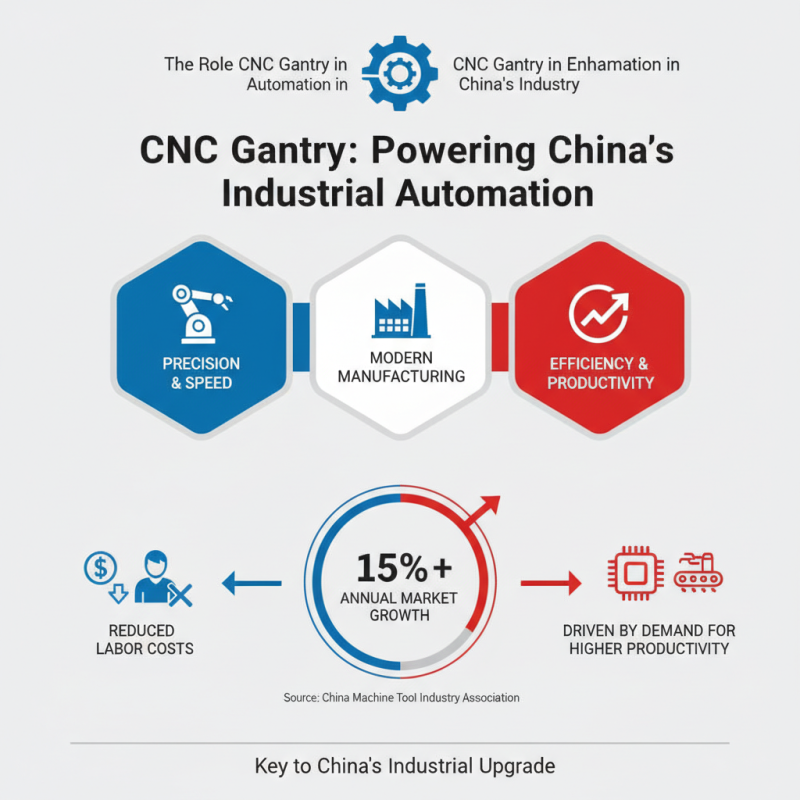
The role of CNC gantry systems in enhancing automation within China’s industries is increasingly significant. These advanced machines offer precision, speed, and efficiency, making them essential for modern manufacturing. According to a report by the China Machine Tool Industry Association, the CNC gantry market has grown by over 15% annually in recent years, driven by the demand for higher productivity and reduced labor costs.
CNC gantries excel in tasks such as milling, drilling, and welding. Their ability to handle large parts with precision minimizes waste, making production processes more sustainable. Studies indicate that companies using CNC gantries report a 30% decrease in production time. However, implementation can be challenging. Many companies face a steep learning curve and require skilled operators to maximize the technology’s benefits.
Tips: Prioritize training for your staff. Investing in skilled labor can significantly enhance your CNC gantry operations. Regular maintenance of CNC gantry systems is equally important. This helps avoid unexpected downtimes and ensures consistent performance. Emphasizing these areas can lead to notable improvements in productivity and efficiency.
Comparative Analysis: CNC Gantry vs. Traditional Manufacturing Methods
CNC gantry systems have gained prominence in modern industries across China. These advanced machines offer unique benefits compared to traditional manufacturing methods. According to a report by the China Machine Tool Industry Association, the efficiency of CNC systems can be 30% higher than conventional machining. This significantly boosts production rates.
One major advantage lies in precision. CNC gantry machines can achieve tolerances within 0.01 mm. Traditional methods often struggle to meet such standards. Furthermore, CNC gantry systems are capable of handling large materials effectively. This versatility is a key attraction for industries such as aerospace and automotive. However, initial investment costs can be high. Companies must evaluate long-term benefits versus upfront expenses.
Moreover, the learning curve for CNC technology can be steep. Training staff requires time and resources. Some firms report a transition period that leads to temporary productivity dips. Despite these challenges, the potential for increased output and reduced waste makes CNC gantry systems compelling. As the industry evolves, continual feedback and adaptation will be essential to maximize these advantages.