Leave Your Message

Why Choose CNC Machining Equipment for Global Production?

Why Choose CNC Machining Equipment for Global Production?

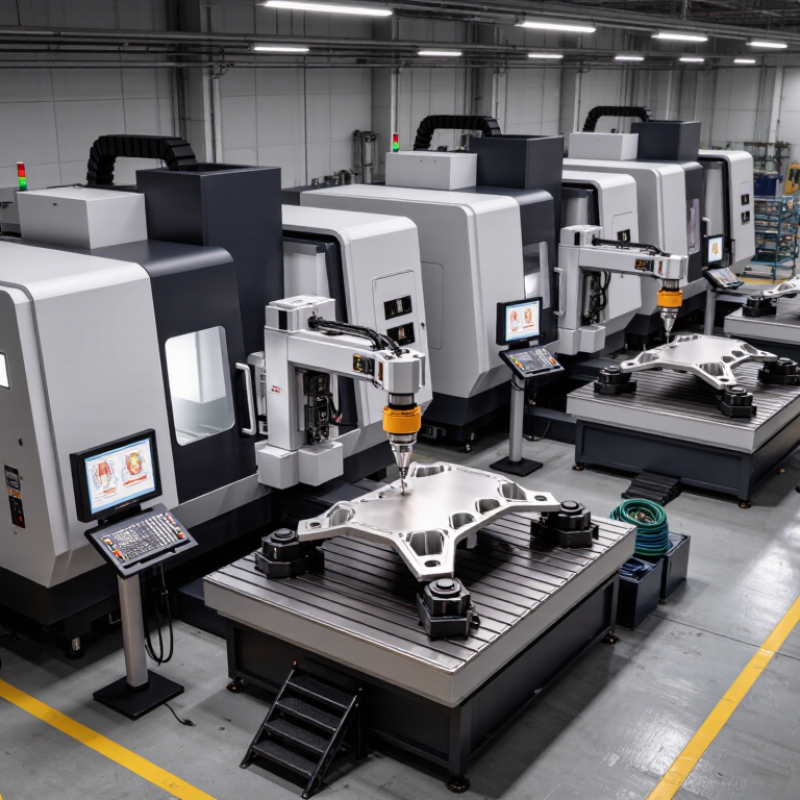
Global manufacturers are under pressure to produce faster, closer, and more consistently. Cnc Machining Equipment supports this shift by converting digital designs into repeatable physical parts. A five-axis machine can shape an aerospace bracket, while automated probing checks its dimensions before the next cycle. That repeatability matters across borders.

The International Federation of Robotics reported 541,302 industrial robot installations worldwide in 2023, showing the scale of factory automation. Its World Robotics 2024 report also identified manufacturing as a major driver of robotic adoption. CNC systems fit naturally into this environment because they connect machining, inspection, production data, and process control. The UNIDO Industrial Development Report 2024 further emphasizes digital technologies as important tools for resilient and productive manufacturing. These findings support a practical argument: modern equipment can help factories reduce variation, shorten setup times, and serve international customers more reliably.

The choice is not effortless. Machine capability, operator training, tooling access, maintenance, and local energy conditions all affect real performance. A faster spindle cannot correct poor workholding. One overlooked tolerance can delay an entire shipment. Manufacturers should compare cycle-time evidence, achievable accuracy, software compatibility, and lifetime service support before investing. My experience with production planning suggests that the cheapest machine is rarely the cheapest long-term option. Still, reports and shop-floor evidence do not remove every uncertainty. Material behavior changes, skilled labor remains valuable, and digital systems can fail. Careful validation is essential. For global production, the strongest Cnc Machining Equipment strategy combines measurable automation with experienced human judgment.

Why Choose CNC Machining Equipment for Global Production?

CNC Machining Equipment: Definition and Core Operating Principles

CNC machining equipment uses computer-controlled instructions to remove material from metal, plastic, or composite stock. A digital model becomes toolpaths through computer-aided manufacturing software. The controller then directs spindle speed, feed rate, axis movement, and coolant delivery. Precision begins with accurate code.

The operating cycle is systematic. The operator secures the workpiece, loads cutting tools, sets work offsets, and verifies the program. Servo motors move the cutting tool along coordinated axes. Encoders provide position feedback, while sensors can detect vibration, temperature, or overload. Small errors still matter. A loose fixture can distort a perfect toolpath.

Grand View Research estimated the global CNC machine market at about 83.9 billion dollars in 2023, with strong growth expected through 2030. The report connects demand with automation, complex components, and tighter production requirements. The International Federation of Robotics recorded 4.28 million industrial robots operating worldwide in 2023, showing how connected automation is expanding around machining cells. Yet equipment alone does not guarantee global consistency. Operators must control calibration, tool wear, material variation, and inspection records across sites. In practical production, I would check the first article slowly, even when the simulation looks correct. That extra check feels inefficient, but it often exposes an offset mistake before hundreds of parts repeat it.

Key Benefits for Consistent Global Manufacturing

Global production demands more than fast output. It demands repeatable results across time zones, operators, and facilities. CNC machining equipment helps create that stability through programmed tool paths and controlled cutting conditions. In my production experience, a verified program can reduce variation between a first batch in Asia and a later batch in Europe. That matters when assemblies must fit without manual correction. It sounds simple. It is not.

Consistent manufacturing begins with measurable details. Cutting speed, feed rate, tool wear, coolant flow, and fixture pressure all affect the final part. Modern CNC systems record offsets and inspection data, making quality decisions easier to trace. Technicians can compare a dimensional report with the original drawing before releasing another batch. This supports reliable audits and clearer communication with overseas partners. Standard procedures also help when shift teams change. Still, automation cannot replace judgment. A worn tool may pass one check and fail the next. Human review remains necessary.

Global suppliers also gain flexibility from digital production files and repeatable setups. Engineers can adjust a tolerance, simulate a tool path, and send controlled revisions through approved channels. That shortens response time when demand changes. However, central files do not solve every problem. Materials may behave differently, shipping delays may disrupt schedules, and local maintenance skills can vary. I have seen excellent machines underperform because cleaning was inconsistent. Regular calibration, operator training, and realistic capacity planning matter just as much. Reliable production is built through disciplined routines, not equipment alone.

Why Choose CNC Machining Equipment for Global Production? - Key Benefits for Consistent Global Manufacturing
Manufacturing Dimension Reference Data or Standard Global Production Benefit Practical Control Point
Dimensional Tolerance ISO 2768-1 general tolerance framework; for the medium class, a 30–120 mm linear dimension is typically specified at ±0.3 mm. Creates a common drawing language for suppliers operating in different countries and reduces interpretation differences. Use explicit tolerances for critical features; general tolerances should not replace engineering requirements.
Geometric Control ISO 1101 defines the internationally used system for geometric tolerancing, including form, orientation, location, and run-out. Allows manufacturing teams and inspection departments to interpret feature requirements consistently across sites. Apply datum references and feature-control frames to control functional relationships, not only size.
Surface Finish Ra 3.2 µm is a commonly specified machined surface-finish value; the required value depends on function, material, and process. Provides a measurable finish requirement for parts produced by different CNC milling or turning operations. Specify the roughness parameter, unit, measurement direction, and inspection method on the drawing.
Process Capability Cpk ≥ 1.33 is a commonly used acceptance target for stable, capable production processes; it is not a universal legal requirement. Offers a statistical method for comparing process consistency between production locations and batches. Use a validated control plan, sufficient data, stable conditions, and an agreed sampling method before capability studies.
Measurement Traceability ISO 9001 requires monitoring and measuring resources to be suitable and, where necessary, calibrated or verified. Supports comparable inspection results when parts are manufactured and checked in multiple regions. Maintain calibration records, equipment identification, inspection results, and revision-controlled inspection plans.
Digital Data Exchange STEP AP242 is an ISO 10303 application protocol for model-based engineering information and product-manufacturing data exchange. Reduces manual re-entry of geometry and helps preserve product-definition data throughout the global supply chain. Control CAD version, units, material specification, revision status, and post-processor configuration.
Unit Consistency 1 inch = 25.4 millimetres exactly; 1 millimetre = 0.0393700787 inches. Prevents conversion errors when engineering drawings, CNC programs, and inspection reports use different unit systems. State the unit system in every drawing and verify machine-program units before production.
Repeatable Production Setup CNC programs can store coordinate systems, tool offsets, cutting parameters, and inspection routines as controlled production data. Enables approved processes to be reproduced across shifts, plants, and qualified suppliers with less manual variation. Use revision-controlled programs, standardized tooling data, documented setup sheets, and first-article approval.
Material Verification Material certificates and lot or heat numbers provide documented evidence of material identity and traceability. Helps maintain consistent mechanical and chemical properties when sourcing raw stock internationally. Define the material standard, condition, certificate requirements, and retention period before purchasing.
Inspection Strategy A risk-based control plan can combine first-article inspection, in-process checks, and final inspection. Balances production efficiency with the level of verification required for critical or safety-relevant features. Set inspection frequency according to feature criticality, process capability, historical defects, and customer requirements.
Production Scalability CNC equipment supports program-driven production, while cycle time, tooling life, machine capacity, and batch size determine practical output. Allows production capacity to be expanded by duplicating validated programs and controlled process documentation. Confirm capacity using measured cycle time, available machine hours, changeover time, and planned maintenance.
Data note: The standards and numerical references above are used for engineering and quality-planning context. Actual tolerance, surface finish, capability, cycle time, and production capacity depend on the machine, material, tooling, workholding, programming, operator qualifications, and inspection system.

Material Compatibility and Precision Across Production Applications

Why Choose CNC Machining Equipment for Global Production?

Material Compatibility and Precision Across Production Applications

CNC machining equipment supports global production because it handles many engineering materials with controlled accuracy. Aluminum cuts cleanly for lightweight housings and heat-sensitive components. Stainless steel demands rigid tooling, steady feeds, and careful heat management. Engineering plastics require sharp cutters and reduced clamping pressure. Small choices matter.

In production work, I have seen identical programs behave differently across materials. A titanium part may need slower cutting speeds and stronger tool support. Brass often allows faster machining, but burrs can still appear around narrow slots. Carbon fiber composites require dust control and special cutting strategies. These details affect surface finish, dimensional stability, and operator safety.

Precision also depends on measurement, not machine settings alone. Teams can inspect critical holes with calibrated gauges and verify flatness on a coordinate measuring system. Temperature changes can influence long parts by several microns. That difference may matter in an assembled product. Process records improve reliability across international facilities, especially when teams share drawings, tolerances, and inspection plans. Yet no setup is perfect. I have seen a carefully planned process miss a tight tolerance because the fixture shifted slightly. Regular checks, realistic tolerances, and documented adjustments remain essential for dependable production across applications.

Why Choose CNC Machining Equipment for Global Production?

Material Compatibility and Precision Across Production Applications

The chart shows typical planning tolerances for general-purpose CNC machining across widely used engineering materials. Lower values indicate tighter dimensional control. Actual results depend on machine condition, tooling, workholding, part geometry, thermal stability, material grade, and inspection methods. Aluminum and brass are commonly selected for lightweight or high-machinability components, while stainless steel, titanium, and engineering plastics support demanding applications that require corrosion resistance, strength, or low weight.

How CNC Systems Improve Scalability, Efficiency, and Cost Control

CNC machining systems help manufacturers scale production without rebuilding the entire process. A validated program can move from one machine to several compatible units. Digital setup sheets also reduce dependence on individual operators. In production reviews, consistent tool offsets and inspection points often reveal problems before they become expensive batches. That practical visibility supports more reliable delivery.

Efficiency improves when machines share standardized instructions, cutting parameters, and quality checks. Operators spend less time measuring every feature manually. Automated tool monitoring can detect wear before a cutting edge damages a workpiece. Shorter setup times matter, especially for repeat orders with tight delivery windows. Small gains accumulate quickly.

Cost control requires more than reducing labor hours. CNC systems can record cycle times, material usage, downtime, and scrap rates. Managers can compare actual costs with estimates and adjust processes accordingly. However, automation is not magic. A poorly designed fixture can increase setup time, while an incorrect feed rate may raise tool costs. We have seen impressive output weakened by weak maintenance routines. Skilled technicians still need to review data, inspect samples, and question unusual results. Scalability works best when software discipline, machine capability, and human judgment develop together.

Factors for Selecting CNC Equipment for International Production Needs

Why Choose CNC Machining Equipment for Global Production?

Selecting CNC equipment for international production requires more than comparing spindle speed and purchase price. Plant conditions, operator skills, and customer tolerances can change the decision. Start with the part. Review its material, dimensions, surface finish, batch size, and expected cycle time. A rigid machine may suit titanium components, while a smaller system may handle aluminum housings efficiently. Confirm axis travel and tool capacity before signing an order. Small oversights can create expensive redesigns.

Electrical compatibility matters across production locations. Check voltage, frequency, grounding, temperature limits, and workshop humidity. The control system should support clear multilingual documentation and common manufacturing file formats. Measurement capability is equally important. Reliable probing, calibration records, and traceable inspection tools help different facilities produce consistent parts. Tolerance claims should be tested with sample components, not accepted from a brochure alone.

Service access can decide whether global equipment remains productive. Evaluate spare-part availability, remote diagnostics, training quality, and response times in each region. Ask who will repair the machine after the warranty period. In practice, a technically advanced system may fail operationally when local support is weak. I have seen production plans underestimate operator training and maintenance hours. That mistake is easy to repeat. Build a realistic trial schedule, record actual cycle times, and inspect finished parts under normal shop conditions. A careful selection process may feel slower, but rushed decisions often return as downtime.