Leave Your Message

7 Tips for Choosing the Right Gantry Machining Center

Choosing the right Gantry Machining Center is rarely a simple matter of comparing prices and spindle speeds. The best decision begins with the workpiece, not the brochure. A massive steel frame may look impressive, yet it can become inefficient for smaller components. Conversely, a compact machine may struggle when plates exceed two meters or require deep cavity milling. Yusuf Altintas, a leading authority in manufacturing automation, has described machine tools as “the mother machines of manufacturing.” That perspective matters. Every cut, tolerance, and production target depends on the machine’s underlying accuracy and stability.

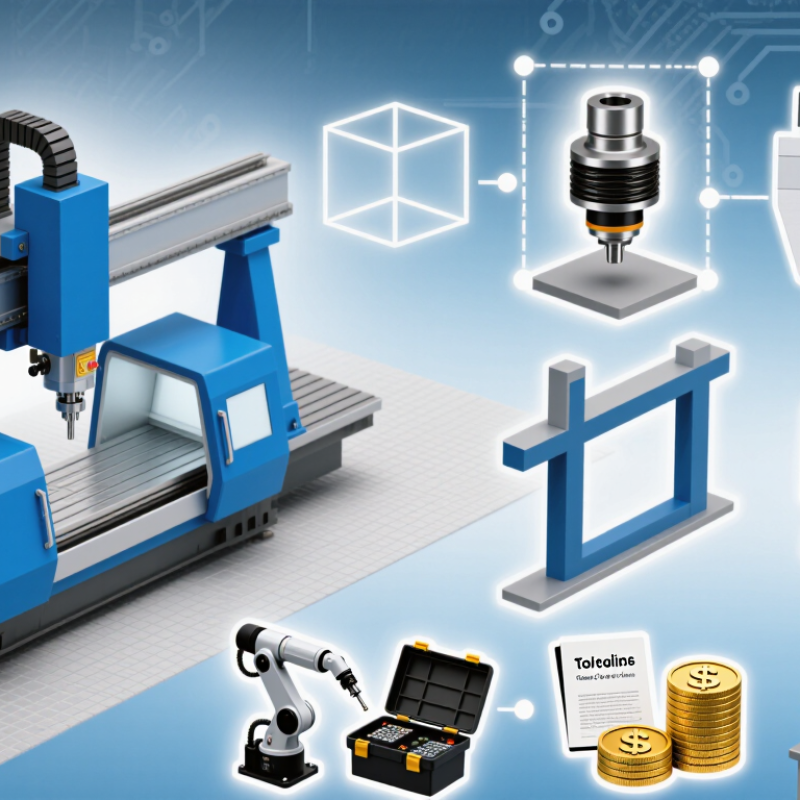
This guide presents seven practical tips for evaluating a Gantry Machining Center. It considers working envelope, spindle performance, structural rigidity, control systems, automation, service support, and total ownership cost. Look closely. A machine’s advertised travel may not reflect its usable workspace after fixtures and tool changes. Thermal drift can also turn a perfect morning calibration into an afternoon problem. Small details matter.

There is no universal winner. That is the uncomfortable truth. A high-speed spindle may shorten aluminum cycles but disappoint during heavy steel removal. Advanced software may improve productivity, but only when operators understand it. Buyers should inspect sample parts, review maintenance records, and ask for realistic cutting demonstrations. Some choices will still involve compromise. The goal is not to find a flawless machine. It is to select a reliable partner that matches your materials, tolerances, floor space, operators, and future workload. That requires evidence, careful questions, and a willingness to challenge attractive specifications.
7 Tips for Choosing the Right Gantry Machining Center

Define the Machining Requirements and Workpiece Dimensions

7 Tips for Choosing the Right Gantry Machining Center

Define the machining requirements before comparing machines. List the material, maximum workpiece length, width, height, and weight. Record every tolerance, surface-finish target, and required cutting operation. A 2.5-meter casting needs more than a 2-meter travel claim. Leave clearance for fixtures, probes, chips, and tool changes. The 2024 Deloitte Smart Manufacturing Survey found that 86% of manufacturing leaders view smart manufacturing as important for competitiveness. That value begins with accurate process data, not attractive specifications.

Tip: Measure the largest real workpiece, not the average one. Include door access, crane capacity, and loading space. Check spindle torque at your normal cutting speed. Horsepower alone can mislead. A heavy steel cut may need torque, while aluminum often rewards higher speed. Specify axis travel after accounting for fixture height. I have seen teams choose a machine that fit the drawing but failed during setup. The spreadsheet looked correct. The workshop did not.

Tip: Build a requirement matrix with “must-have” and “nice-to-have” columns. Use ISO 230-1 principles when reviewing positioning accuracy and repeatability data. Request test conditions, thermal-stability details, and measurement uncertainty. According to the U.S. Department of Energy, industrial motor systems account for a substantial share of factory electricity use, so duty cycle matters. Estimate spindle hours, rapid movements, and idle time. Recheck the numbers with an operator. That step is easy to skip, and sometimes it exposes the wrong machine choice.

Match the Machine Structure to Your Production Needs

7 Tips for Choosing the Right Gantry Machining Center

Match the Machine Structure to Your Production Needs

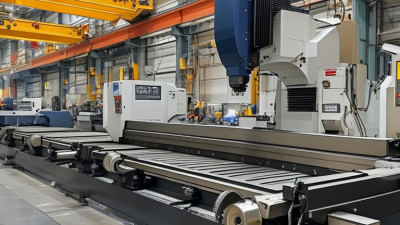
Tip 1: Start with the workpiece, not the machine brochure. Measure its length, width, height, and weight. A moving-table design can suit compact parts, but long components may need a moving gantry. Leave clearance for fixtures and loading equipment.

Tip 2: Check how the structure handles cutting forces. Fixed-column gantry frames usually provide strong support and stable tool movement. Moving-gantry machines can cover larger areas, yet their bridges must remain rigid during heavy cuts. Watch for vibration around corners and deep pockets.

Tip 3: Study the crossrail and column layout. Wide support spacing can improve accuracy across the working area. Adjustable crossrails may help with tall parts, but they can add setup time. That trade-off is easy to overlook.

Tip 4: Match the axis travel to your real production range. Oversized travel increases floor space, energy use, and sometimes thermal variation. A machine that is too small creates awkward setups and repeated repositioning. Neither choice is perfect.

During machine-floor evaluations, I have found that chip evacuation affects daily output more than expected. Look for open access, effective coolant flow, and simple cleaning points. Operators should reach fixtures without climbing or stretching.

Tip 5: Consider temperature changes. Large gantry structures can expand unevenly during long cycles. Ask about thermal compensation, warm-up procedures, and inspection methods. Test a representative part, if possible. A specification sheet cannot reveal every behavior.

Tip 6: Include maintenance access in the decision. Check lubrication points, linear guide protection, electrical cabinets, and service clearance. The best structure is useless when routine maintenance becomes difficult. Ask operators what they would change after one year.

Evaluate Spindle Power, Speed, and Cutting Performance

7 Tips for Choosing the Right Gantry Machining Center

Spindle power should match the materials, tools, and cutting depths your shop uses daily. A high horsepower rating can look impressive, but it may hide weak torque at lower speeds. Check the spindle torque curve, not only the peak power figure. Numbers can mislead. For aluminum, high speed and efficient chip evacuation often matter most. Steel and cast iron usually demand stronger torque, greater rigidity, and stable low-speed cutting. Do not guess. Compare the machine’s rated performance with your actual tool diameters and workpiece sizes.

Spindle speed also affects surface finish, cycle time, and tool life. Excessive speed can create heat, vibration, or premature edge wear. Insufficient speed may leave visible tool marks and increase production time. Ask for cutting data based on your material, cutter diameter, and required tolerance. A practical test cut is valuable. Watch spindle load, sound, chip shape, and temperature during the test. These details often reveal more than a specification sheet.

Cutting performance depends on the complete system. The spindle, bearings, structure, control system, coolant delivery, and tool holding must work together. A powerful spindle cannot compensate for poor rigidity. I have seen evaluations focus too heavily on horsepower while overlooking vibration under side milling. That is an easy mistake to make. Review acceleration, interpolation accuracy, thermal stability, and recovery after heavy cuts. If possible, test both roughing and finishing operations. The best choice should deliver steady torque, controlled speed, clean chips, and repeatable results across realistic production conditions.

7 Tips for Choosing the Right Gantry Machining Center

Evaluate spindle power, speed, and cutting performance before selecting a machine configuration.

The chart compares representative gantry machining center configurations. Estimated steel material removal rate is calculated from spindle power using 75% cutting efficiency and 2.5 J/mm³ specific cutting energy. Confirm final values with the machine builder under your actual tooling, workpiece, and cutting conditions.

Check Accuracy, Automation, and Control System Features

7 Tips for Choosing the Right Gantry Machining Center

Accuracy should be checked under real production conditions, not only in a showroom. Ask for positioning accuracy, repeatability, and volumetric test results. Inspect a sample part with large flat surfaces, deep pockets, and tight holes. Measure it after machining, then repeat the cycle. Thermal drift matters. A machine may perform well during a short demonstration but shift after several hours. Confirm spindle stability, guideway rigidity, and table flatness at your expected load. Numbers reveal weaknesses.

Automation should reduce handling without creating new delays. Check tool capacity, chip removal, pallet changing, probing, and workpiece access. Watch the complete loading cycle with an operator nearby. A fast tool changer is less useful if chip buildup causes frequent cleaning. Confirm whether the system supports unattended machining and records alarms clearly. Also examine fixture flexibility. Oversized parts often need careful positioning, and a narrow access area can waste valuable setup time.

The control system deserves practical testing. Review programming compatibility, simulation functions, tool-life monitoring, and data access. Operators should reach key settings quickly, even while wearing gloves. Ask whether the interface supports custom alarms and remote diagnostics. Service availability also affects reliability, so request response times and training details in writing. I once focused too heavily on spindle power and overlooked software usability. That mistake increased setup time. A trial run with your own drawings and tools can expose similar problems before purchase.

7 Tips for Choosing the Right Gantry Machining Center - Check Accuracy, Automation, and Control System Features
No. Selection Dimension Practical Benchmark or Data Point Why It Matters What to Verify Before Purchase
1 Match the Working Envelope to the Part Specify X, Y, and Z travel from the largest finished part, then add clearance for fixtures, cutters, and tool approach. A common planning allowance is approximately 10–20% beyond the maximum part envelope. A machine that is too small limits future work and may force multiple setups. An oversized machine can increase floor-space, energy, and investment requirements. Confirm actual axis travel, table dimensions, maximum workpiece height, spindle-to-table distance, column clearance, and permissible workpiece weight.
2 Evaluate Positioning and Volumetric Accuracy Compare positioning accuracy and repeatability using the same test method. ISO 230-2 and ASME B5.54 are commonly used references for machine-tool accuracy testing. Axis accuracy affects hole locations, pockets, contours, and the ability to maintain dimensions across multiple setups. Request a recent factory or acceptance test report, identify ambient-temperature conditions, and check whether accuracy values are specified per axis or across the working volume.
3 Check Structural Rigidity and Thermal Stability Look for a rigid bridge, balanced guideway arrangement, and documented thermal-compensation functions. Use cutting-test results rather than relying only on static specifications. Gantry deflection, vibration, and thermal growth can cause poor surface finish, chatter, dimensional drift, and shortened tool life. Review bridge construction, guideway type, foundation requirements, spindle cooling, temperature monitoring, warm-up procedures, and compensation settings.
4 Select Spindle Power and Speed for the Material Compare continuous power, peak power, rated torque, maximum speed, and the torque curve. Heavy steel cutting generally benefits from strong low-speed torque, while aluminum and finishing operations may require higher speed. A high maximum rpm alone does not guarantee productive roughing. The usable power and torque range must match the cutting tools and materials. Verify spindle taper, allowable tool diameter, through-spindle coolant options, bearing arrangement, acceleration time, duty cycle, and rated power at the required speed range.
5 Assess Automation and Chip Management Useful options may include automatic tool changing, tool-length measurement, probe-based workpiece setting, chip conveyors, coolant filtration, and pallet or fixture automation. Automation reduces setup time, operator intervention, and the risk of manual input errors, especially in repeat production and unattended cycles. Compare tool magazine capacity, tool-change time, probe repeatability, chip-conveyor layout, coolant flow, access for cleaning, and compatibility with robots or pallet systems.
6 Review CNC Control and Data Connectivity Prioritize features such as look-ahead processing, high-speed machining functions, tool and work offsets, collision-avoidance support, program transfer, alarm history, and production-data access. The control system influences contour quality, program execution, troubleshooting time, operator usability, and integration with manufacturing software. Confirm supported G-code functions, maximum program size, memory expansion, Ethernet or fieldbus connectivity, remote diagnostics, user-access levels, backup procedures, and operator training requirements.
7 Calculate Total Cost of Ownership and Serviceability Include purchase price, installation, foundation work, tooling, coolant systems, energy consumption, preventive maintenance, spare parts, software options, and expected downtime over the planned service life. Availability and maintenance costs can have a greater effect on production economics than the initial machine price. Ask for service response times, spare-parts lead times, warranty coverage, maintenance intervals, lubrication access, diagnostic tools, training, and documented machine availability targets.
Benchmark values are general purchasing guidelines. Final requirements should be confirmed through application-specific cutting tests, acceptance testing, and the machine builder’s technical documentation.

Compare Supplier Support, Total Cost, and Long-Term Value

7 Tips for Choosing the Right Gantry Machining Center

Compare Supplier Support, Total Cost, and Long-Term Value

A low purchase price can hide expensive downtime. Compare installation, operator training, spare-part availability, and technical response times. Ask for service-level commitments, not friendly promises. I have seen machines wait days for a simple spindle sensor. That delay affects schedules, labor, and customer confidence. Request a five-year cost model covering tooling, electricity, coolant, maintenance, software, and planned repairs.

The U.S. Department of Energy’s Operations & Maintenance Best Practices Guide estimates that effective maintenance can reduce energy use by 5–20%. That figure changes the investment discussion. A supplier should explain maintenance intervals, diagnostic access, and realistic energy consumption. Require references from facilities with similar workpieces, travel distances, and production hours. One reference is not enough.

Integration also affects long-term value. The International Federation of Robotics’ World Robotics 2024 report recorded 4.28 million industrial robots operating worldwide in 2023. Gantry centers increasingly share data with robots, inspection systems, and factory networks. Confirm compatibility before signing. Training matters, too. Ask who supports future software updates and employee turnover. Our early evaluation once focused too heavily on accuracy and ignored response time. That was a mistake. A technically excellent machine still loses value when support is slow, unclear, or difficult to reach.