Leave Your Message
Global buyers are reassessing machining capacity as aerospace, automotive, medical, and energy supply chains become more regional. The CNC machine market reflects this shift. Grand View Research reports that the global CNC machine market was valued at approximately USD 83 billion in 2023, with continued growth expected through 2030. Its analysis also highlights automation, precision manufacturing, and connected production as major demand drivers. These trends make supplier selection more complex than comparing catalog prices.
This guide examines the top three axis CNC machine manufacturers serving international buyers. The phrase Three Axis Cnc Machine describes equipment with controlled movement along the X, Y, and Z axes. In practical terms, these machines can cut aluminum housings, steel brackets, and detailed plastic components. However, performance depends on spindle stability, positioning accuracy, control software, service response, and operator training. The International Organization for Standardization provides testing references, including ISO 230-2 for positioning accuracy and repeatability. Buyers should request test data, not rely only on marketing claims.
Industry reports offer useful market direction, but they do not replace factory audits or sample machining. No ranking is perfect. A manufacturer may lead in high-speed milling but provide weaker regional support. Another may offer excellent value, yet lack dependable spare-part availability. This introduction therefore considers technical capability, production experience, certification practices, export support, and customer evidence. Data from the International Federation of Robotics also shows rising automation adoption across manufacturing, reinforcing the need for compatible controls and skilled support. Global buyers should inspect real components, review warranty terms, and confirm delivery promises before signing. Small details matter. A missed tolerance can become a costly production delay.
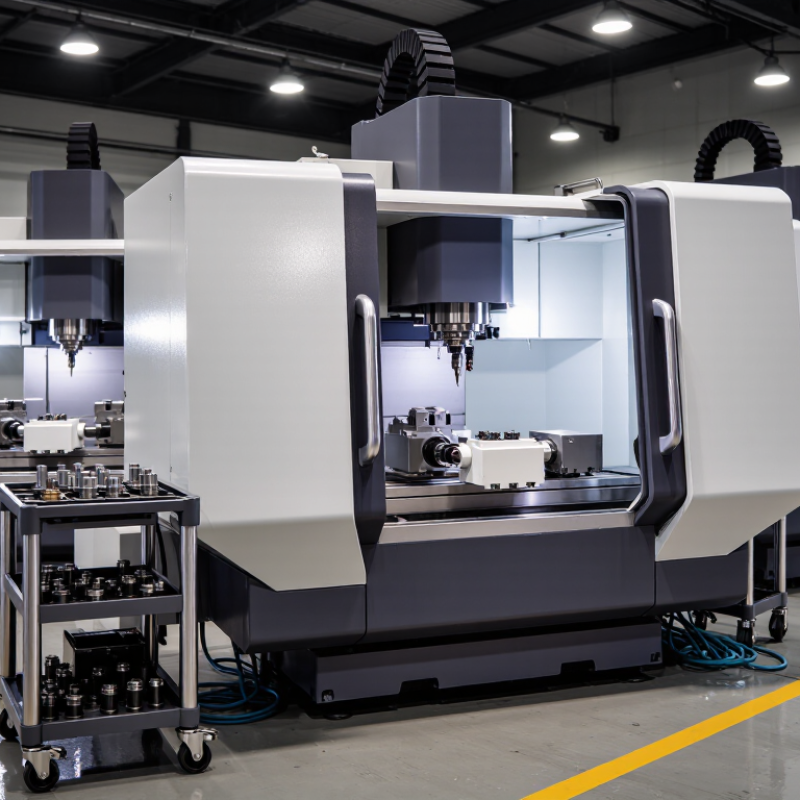
A three-axis CNC machine controls movement along X, Y, and Z axes. X moves left to right. Y moves front to back. Z moves vertically.
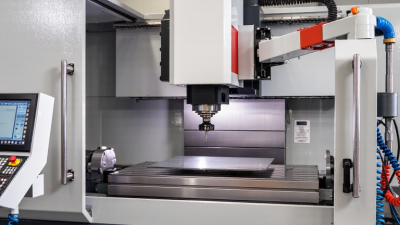
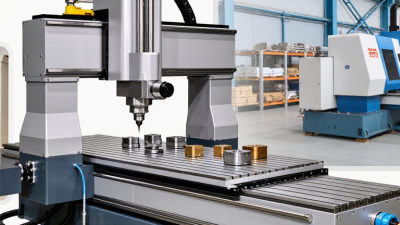
Its structure usually includes a rigid bed, column, spindle, worktable, drive screws, servo motors, and a numerical controller. The spindle cuts while the table holds the workpiece firmly. Linear guides reduce friction and support repeatable motion. In practical shop use, rigidity matters as much as speed; a flexible frame can leave visible chatter marks on aluminum or steel. Cutting fluid, tool condition, and thermal stability also influence accuracy.
Three-axis systems suit milling, drilling, pocketing, engraving, and fixture production. They serve automotive components, industrial equipment, electronics housings, and medical-device parts. A 2024 report from Grand View Research estimated the global CNC machine market at more than USD 80 billion in 2023, with continued growth projected through 2030. The International Federation of Robotics reported 541,302 industrial robot installations worldwide in 2023, showing broader investment in automated production. These figures do not measure three-axis machines directly, but they indicate strong demand for programmable manufacturing.
The limitation is clear. Complex curved surfaces may require additional axes or multiple setups. More setups create alignment risk. That point is easy to underestimate. Buyers should compare working envelope, spindle power, positioning accuracy, controller capability, service access, and operator training, rather than judging only the machine’s purchase price.
| Data Dimension | Three-Axis CNC Machine Information | Typical or Common Data | Global Buyer Relevance |
|---|---|---|---|
| Definition | A computer numerical control machine that moves a cutting tool or workpiece along three linear axes. | X-axis, Y-axis, and Z-axis linear motion. | Suitable for most conventional milling, drilling, tapping, pocketing, and contouring operations. |
| Axis Configuration | The three axes provide movement in length, width, and vertical depth directions. | X: left-to-right; Y: front-to-back; Z: up-and-down. | The workpiece normally remains fixed while the spindle follows programmed linear toolpaths. |
| Machine Structure | Common assemblies include a machine bed, column, table, spindle head, linear guideways, ball screws, and protective enclosure. | Vertical machining centers are widely used because the spindle is positioned above the worktable. | A rigid cast or fabricated structure helps reduce vibration and supports repeatable cutting. |
| CNC Control System | The controller interprets programmed instructions, commonly written in G-code, and coordinates axis and spindle movement. | Typical functions include interpolation, tool compensation, work offsets, probing, and alarm monitoring. | Buyers should verify software compatibility, language support, remote diagnostics, and local service capability. |
| Spindle System | The spindle rotates the cutting tool and transfers cutting power to the workpiece. | Common spindle speeds range from several thousand revolutions per minute to more than 10,000 rpm, depending on machine design. | Spindle speed, power, taper type, cooling method, and tool interface should match the material and cutting process. |
| Worktable and Fixturing | The worktable supports the workpiece and fixture through T-slots, threaded holes, or other clamping arrangements. | Usable table size and maximum workpiece load vary significantly by machine model. | Check table dimensions, load capacity, fixture access, and the required number of setups. |
| Typical Work Envelope | The work envelope is the maximum usable travel available along the X, Y, and Z axes. | Small, standard, and large machines may offer work envelopes from a few hundred millimeters to more than one meter per axis. | Select travel capacity based on part size, fixture dimensions, tool length, and chip-clearance requirements. |
| Positioning and Repeatability | Accuracy describes how closely the machine reaches a commanded position; repeatability describes how consistently it returns to that position. | Values depend on machine class, thermal conditions, calibration, tooling, and measurement method. | Request documented test results rather than relying only on general catalog claims. |
| Common Materials | Three-axis CNC machines can process metals, plastics, wood, composites, and certain non-metallic materials when properly configured. | Aluminum, steel, stainless steel, brass, engineering plastics, hardwood, and composite panels are common examples. | Material choice affects spindle power, tooling, cutting speed, coolant requirements, and machine rigidity. |
| Core Applications | Used for producing prismatic parts, flat surfaces, holes, slots, pockets, steps, and accessible three-dimensional contours. | Prototype machining, job-shop production, mold components, fixtures, brackets, plates, and general mechanical parts. | Well suited to industries requiring flexible production with moderate setup complexity. |
| Production Volume | Supports one-off prototypes, low-volume custom parts, and repeat batch production. | Automation options may include tool changers, probing systems, pallet systems, chip conveyors, and bar-feeding solutions where applicable. | Evaluate cycle time, tool-change speed, automation readiness, and operator requirements. |
| Main Advantages | Lower mechanical complexity than multi-axis machines, broad process capability, and relatively straightforward programming. | Generally easier to operate, maintain, train, and integrate into standard machining workflows. | Often a practical entry point for workshops seeking digital machining capability and predictable operating costs. |
| Main Limitations | The tool cannot continuously approach a part from multiple rotary angles without repositioning the workpiece. | Complex undercuts and some multi-sided parts may require additional setups, special fixtures, or a four- or five-axis machine. | Consider future part complexity before selecting a three-axis configuration. |
| Buyer Evaluation Criteria | Compare machine rigidity, travel, spindle specifications, control functions, tooling, safety features, and service support. | Also review installation requirements, power supply, compressed air, coolant handling, floor space, warranty, and spare-parts availability. | A complete technical and after-sales assessment is more reliable than comparing purchase price alone. |
Note: Specifications and performance vary by machine configuration, tooling, workholding, material, environmental conditions, and operating practices. Confirm final values in the applicable technical documentation.
This article introduces the Three Axis Cnc Machine, explaining its basic definition, structural components, operating principles, and core applications across industries such as metalworking, furniture production, automotive parts, and general manufacturing. It also explains why three-axis systems remain popular among global buyers: they offer a practical balance of precision, versatility, ease of operation, and cost efficiency for many standard machining tasks.
The article then presents three leading manufacturer profiles selected according to product quality, technical capabilities, production capacity, international market coverage, customer support, and overall buyer suitability. Each profile highlights different strengths, including product range, engineering expertise, manufacturing resources, after-sales service, customization options, and market positioning. By comparing these factors, readers can better understand how to evaluate suppliers, match machine features with production requirements, and choose a reliable solution for their business needs in different international markets.