Leave Your Message

7 Tips for Choosing the Best VMC Machine?

Choosing the right Vmc Machine can shape your shop’s productivity, accuracy, and future costs. A machine may look impressive under bright showroom lights, yet struggle with your actual parts. The correct choice depends on materials, tolerances, batch sizes, floor space, operator skills, and service support.

CNC manufacturing educator Mike Lynch offers a useful purchasing principle: “Match the machine to the job, not the job to the machine.” This idea should guide every decision in the article, from spindle speed to control-system usability. A steel component requiring tight tolerances may need greater rigidity, thermal stability, and reliable coolant delivery. Aluminum production may place stronger emphasis on speed, chip evacuation, and rapid tool changes. Details matter.

Start with the work you truly expect. Not only the ideal order. Review drawings, fixture sizes, tool lengths, and average cutting loads. Then question the sales brochure. Some specifications look excellent, but they may not reflect real cutting conditions. That is where buyers can make mistakes.

The following seven tips examine practical selection points, including machine structure, work envelope, spindle performance, control features, automation, maintenance, and total ownership cost. No single Vmc Machine fits every workshop. Sometimes, a simpler model is the wiser investment. Sometimes, paying more prevents expensive limitations later. Your decision should be evidence-based, but experience still matters. A test cut can reveal more than a polished specification sheet.
7 Tips for Choosing the Best VMC Machine?

Define Your VMC Machining Needs and Production Goals

Choosing the best VMC starts with defining production reality, not browsing machine catalogs. List materials, maximum part dimensions, fixture height, tolerances, surface finish, annual volume, and batch size. Measure twice. Include recurring operations: drilling, pocketing, contouring, and tapping. A machine must fit the work envelope with clearance, not merely hold the largest part. Record current cycle times and scrap causes. Those numbers expose capacity gaps.

Set goals in measurable terms. Is the target lower cycle time, fewer setups, unattended hours, or stable micron-level accuracy? Define spindle speed and torque around the materials you machine. Check tool capacity, rapid traverse, coolant, probing, chip evacuation, and fourth-axis readiness. A faster spindle may disappoint when low-speed torque is essential. Keep it practical. Build three scenarios: present workload, 25% growth, and your most difficult job. Include operator skill and maintenance access.

Industry data supports planning beyond today’s job list. Deloitte’s 2024 Smart Manufacturing and Operations Survey found that 86% of manufacturers view smart manufacturing as important to competitiveness within five years. The International Federation of Robotics reported 541,302 industrial robot installations globally in 2023. Evaluate data collection, probing, pallet handling, and future integration before purchasing. Still, do not over-automate a low-volume shop. The spreadsheet may be wrong. Validate assumptions with timed cutting tests, sample programs, and neutral acceptance criteria. A quiet machine is not automatically productive; verified output, repeatability, and operator safety matter more.

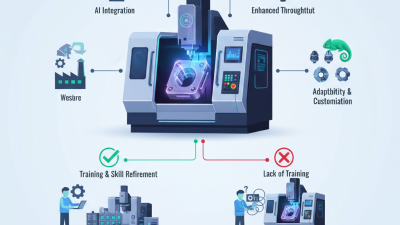
Compare Machine Specifications, Capacity, and Precision

Choosing the best VMC machine starts with measurable specifications, not attractive photographs. I compare X, Y, and Z travel against the largest workpiece, leaving room for fixtures and tool access. Table load matters too. A heavy mold can expose an undersized machine quickly. Grand View Research estimated the global CNC machine market at about USD 83.9 billion in 2023, showing strong demand for capable, scalable equipment. Yet market growth does not guarantee the right configuration.

Capacity must match daily production, not occasional ambition. Check spindle power, torque, tool capacity, chip removal, and automatic tool-change time. A 10,000-rpm spindle may suit steel, while aluminum often benefits from higher speed. Ask for documented cycle-time tests. Spec sheets can hide assumptions. I have seen buyers prioritize maximum travel, then discover their fixture blocks the coolant path. That mistake is expensive.

Precision needs evidence under operating conditions. ISO 230-2 provides methods for testing positioning accuracy and repeatability, so request test results using recognized procedures. Look for repeatability figures in microns, thermal compensation details, and calibration records. A machine claiming ±0.005 mm may perform differently after heat builds around the spindle. The 2024 World Machine Tool Survey identifies Asia-Pacific as the largest consumption region, but regional popularity should not replace application testing. Run your own sample part. Measure critical holes, flatness, and surface finish. Leave room for doubt.

Evaluate Control Systems, Tooling, and Automation Features

Tip 1: Inspect the control system before judging the machine’s speed. Operators should reach offsets, alarms, and program screens without excessive menu changes. A clear interface reduces mistakes during long shifts. I have found that familiar controls often outperform impressive specifications.

Tip 2: Run a real sample program during evaluation. Watch how quickly the system responds to commands and displays tool movement. Tip 3: Check data access and backup options. Reliable storage matters when production records or proven programs must be recovered. Small details count. A bright screen is not enough.

Tip 4: Examine the tooling system with your actual cutters and holders. Confirm capacity, changing time, and repeatable clamping. Tip 5: Measure worktable access around large fixtures. Poor clearance can turn a simple setup into a frustrating adjustment. Tip 6: Verify tool measurement features, including broken-tool detection and offset correction. These functions can protect accuracy, though they still need regular calibration.

Tip 7: Judge automation by practical workflow, not appearance. Test pallet changes, chip removal, probing, and communication with production software. Ask whether one operator can manage the process safely. Automation may look efficient but create delays when recovery steps are unclear. Request a live demonstration using realistic materials, cycle times, and interruptions. I would also record the weak points. They often reveal more than the sales data.

How to use this chart: The percentages represent a practical evaluation-weighting framework for comparing vertical machining centers. Give the highest priority to control capability, accuracy, tooling, and automation because these factors directly influence programming efficiency, part consistency, setup time, and production throughput. Adjust the weights according to your workpiece materials, batch size, tolerances, and operator skill level.

Assess Build Quality, Maintenance, Service, and Support

Tip 1

Inspect build quality beyond the brochure. A rigid cast-iron base should feel stable during heavy cutting. Check guideways, spindle runout, enclosure seals, and cable protection. Ask for measured accuracy reports, not general claims. A clean test cut reveals more than polished photographs.

Tip 2

Study maintenance while standing beside the machine. Can an operator reach lubrication points without removing panels? Are filters, coolant tanks, and chips easy to clean? Request the recommended service intervals and spare-parts list. I once underestimated chip removal time; that mistake became an expensive daily habit. Keep a simple maintenance log from the first shift.

Tip 3

Test service and support before placing an order. Ask who answers technical calls, how quickly engineers respond, and whether remote diagnostics are available. Confirm training, installation guidance, warranty terms, and local parts access in writing. A supplier should explain common faults clearly, not hide behind vague promises. Request customer references with similar materials, tolerances, and production hours.

Bring your actual drawings to the evaluation. Run a sample part, measure its dimensions, and inspect the surface finish under normal production settings. Also ask what happens after the warranty ends. Support that sounds excellent during sales discussions can become slower later. Leave room for doubt; a careful decision often starts with uncomfortable questions.

Calculate Total Cost, Efficiency, and Long-Term Value

Choosing the best VMC machine requires more than comparing the purchase price. Calculate total cost across seven areas: machine price, tooling, installation, energy, maintenance, training, and downtime. A cheaper machine may demand expensive fixtures or longer setup hours. That difference becomes visible after several production cycles.

Measure cycle time with your actual material and part drawings. The U.S. Department of Energy reports that compressed-air systems can represent 10% to 30% of industrial electricity use, so check leakage, pressure, and standby consumption. Ask for energy data under cutting conditions, not only idle readings. The International Energy Agency’s Energy Efficiency 2023 report also identifies industry as a major source of global energy demand, making small efficiency gains financially meaningful.

Inspect spindle power, tool-change time, thermal stability, control usability, and service response. The ISO 14955 standard links machine-tool design with energy-efficient operation, but energy is only one part of value. I have seen buyers overlook operator training. That mistake returns later as scrap and hesitation. Request maintenance intervals, spare-part costs, accuracy tests, and realistic uptime records. Reliability claims need evidence. Calculate cost per good part over five years, including rejected parts and lost shifts. The answer may be uncomfortable. That is useful.

7 Tips for Choosing the Best VMC Machine? - Calculate Total Cost, Efficiency, and Long-Term Value

No. Selection Tip Key Data to Compare Typical Planning Range or Reference Calculation Method Decision Rule
1 Calculate the Total Cost of Ownership Purchase price, installation, tooling, software, training, maintenance, electricity, coolant, and financing costs. Installation and commissioning commonly add about 5%–15% to the machine purchase price. Annual maintenance and consumables should be listed separately rather than hidden in the purchase quote. 5-Year TCO = Purchase Price + Installation + Tooling + Training + Financing + 5-Year Energy and Consumables + 5-Year Maintenance − Residual Value Select the machine with the lowest verified five-year cost, not simply the lowest initial price.
2 Match the Work Envelope to Real Parts X/Y/Z travels, table size, maximum workpiece dimensions, table load, spindle-to-table distance, and tool-change clearance. Keep at least 10%–20% clearance around the largest planned part where possible. Check the actual fixture, vise, rotary axis, and tool length—not only the machine's nominal travel. Required travel = Part size + Fixture size + Tool clearance + Safety margin Reject any model that fits the raw part but cannot safely accommodate the fixture, tooling, or chip evacuation space.
3 Compare Productivity, Not Only Spindle Speed Spindle power, torque curve, rapid traverse, cutting feed rate, acceleration, tool-change time, and control response. A higher maximum RPM is useful for small tools and aluminum, while torque at low and medium RPM is more important for steel, stainless steel, and heavy milling. Evaluate the complete spindle curve. Annual output = Available production hours × Utilization rate ÷ Average cycle time per part Use a sample-part cutting test and compare complete cycle time, including tool changes, probing, loading, and inspection.
4 Verify Accuracy and Repeatability Positioning accuracy, bidirectional repeatability, thermal stability, backlash, volumetric accuracy, and inspection capability. Many standard production VMCs specify positioning accuracy in the range of approximately ±0.005–±0.015 mm and repeatability around ±0.002–±0.005 mm; actual results depend on test conditions and machine size. Effective capability = Machine accuracy + Tooling error + Fixture error + Thermal drift + Measurement uncertainty Request a documented acceptance test under conditions similar to your production environment.
5 Measure Energy and Utilization Efficiency Connected load, average operating load, idle power, standby power, coolant pump consumption, spindle utilization, and automation readiness. Electricity use varies significantly by machine size, material, cutting parameters, and utilization. Measure actual kWh per part or kWh per spindle hour instead of relying only on the motor rating. Energy cost per part = kWh per part × Electricity rate
OEE = Availability × Performance × Quality
Prefer lower idle power, rapid warm-up, efficient coolant systems, and high spindle utilization when production volume is consistent.
6 Evaluate Serviceability and Downtime Risk Preventive maintenance intervals, critical spare parts, remote diagnostics, local technical support, repair response time, and operator training. Calculate downtime using your actual production value. Even a few hours of unplanned downtime can exceed the cost difference between two machines when the machine supports a bottleneck operation. Downtime cost = Lost contribution margin per hour × Unplanned downtime hours + Expediting and recovery costs Choose documented service coverage and spare-parts availability over unverified promises of maximum performance.
7 Estimate Long-Term Value and Resale Potential Expected service life, upgrade options, control compatibility, automation compatibility, maintenance history, utilization, and residual value. A well-maintained CNC machine may remain productive for 10–20 years, but resale value depends on condition, accuracy, control generation, hours, documentation, and market demand. Annualized cost = (5-Year TCO − Residual Value) ÷ Expected productive years Select a platform that can be upgraded with probing, additional tooling capacity, automation, monitoring, or software as requirements grow.

Planning note: The ranges shown are general industry planning references rather than guaranteed specifications. Confirm final performance, energy consumption, installation requirements, and total costs through a written quotation, sample-part test, and machine acceptance protocol.