Leave Your Message

What Is the Best Three Axis CNC Machine in 2026?

Choosing the best Three Axis Cnc Machine in 2026 requires more than comparing prices and spindle speeds. A capable machine should deliver accurate cuts, stable motion, practical software, and dependable support. In a working shop, these details become obvious. A loose gantry can leave visible ridges on an aluminum pocket. Weak dust collection can cover the operator’s hands within minutes. Poor documentation can waste an entire afternoon.

This guide examines the features that matter during real machining work. It considers frame rigidity, controller performance, work area, spindle power, repeatability, and maintenance access. Material choice also changes the decision. A machine designed for wood signs may struggle with steel brackets. A compact desktop model may suit prototypes, but not continuous production. Manufacturer specifications provide useful evidence, yet they should not be accepted without practical context. Independent reviews, verified customer feedback, and service records deserve attention.

There is no universal winner.

The strongest choice depends on your workload, budget, training, and available space. Experienced operators often value predictable calibration over impressive marketing numbers. Beginners may need simpler software and safer operating features. Even skilled users can overlook noise, chip control, or the cost of tooling. This comparison aims to separate meaningful performance from attractive claims. Some conclusions may remain debatable, because machine results depend on setup, materials, and operator habits. That uncertainty matters. A careful buyer should test sample cuts, confirm local support, and judge long-term reliability before making a final decision.

What Is the Best Three Axis CNC Machine in 2026?

What Defines a Three-Axis CNC Machine in 2026

What Is the Best Three Axis CNC Machine in 2026?

What Defines a Three-Axis CNC Machine in 2026

A three-axis CNC machine moves its cutting tool along X, Y, and Z coordinates. X controls side-to-side travel. Y controls front-to-back movement. Z controls vertical depth. The workpiece usually stays fixed during cutting, unlike systems with rotary axes.

In 2026, the definition includes more than three motors. A capable machine should offer stable linear guides, measurable positioning accuracy, reliable feedback, and a controller that handles modern toolpaths. Automatic tool measurement, collision alerts, simulation, and network diagnostics are increasingly practical features. They reduce setup mistakes beside the machine.

The best choice depends on the work, not the largest specification sheet. Check the cutting envelope, spindle speed range, table rigidity, chip removal, and service access. Repeatability should be verified under realistic temperature and load conditions. Numbers need context. A neat specification sheet can still mislead.

In daily workshop use, a rigid frame often matters more than an impressive top speed. Aluminum parts may need high spindle speed, while steel demands controlled cutting force and steady cooling. Small tolerance changes can appear after several hours of operation. I have learned that calibration routines are easy to ignore, especially during urgent production. That habit deserves correction. A three-axis machine remains valuable because it is straightforward, accurate, and easier to program than more complex platforms, but its real performance depends on installation, tooling, maintenance, and operator judgment.

Key Performance Factors for Comparing Three-Axis CNC Machines

What Is the Best Three Axis CNC Machine in 2026?

The best three-axis CNC machine is not defined by spindle speed alone. Rigidity comes first. A heavy cast frame should resist vibration during deep cuts, especially in steel or hardened materials. Check spindle torque across the working range, not only the advertised peak speed. A 12,000-rpm spindle may appear impressive, but low torque can slow real production.

Accuracy needs practical testing. ISO 230-2 evaluates positioning accuracy and repeatability under controlled conditions. Ask for test results, thermal compensation details, and measured backlash. A machine holding tight tolerances after six hours of cutting is more valuable than one achieving impressive figures for ten minutes. Measure the basics.

Work envelope also matters. Leave space around fixtures, probes, and long tools. Poor access can turn a simple setup into a daily frustration. Chip evacuation deserves attention too. Watch a cutting demonstration using your material, coolant, and typical toolpaths. Clean chips should not collect around the vise or damage finished surfaces.

Digital capability increasingly affects productivity. Deloitte’s 2024 Smart Manufacturing and Operations Survey found that 86% of manufacturing leaders expect smart manufacturing to become a major competitiveness factor within five years. Therefore, evaluate data access, alarm history, remote diagnostics, and controller usability. Energy consumption, maintenance access, and tool-change reliability should be recorded during acceptance tests. I would not trust a ranking based only on brochure specifications. Real shops expose weaknesses quickly.

What Is the Best Three Axis CNC Machine in 2026? - Key Performance Factors for Comparing Three-Axis CNC Machines

A practical comparison of representative three-axis CNC machine categories based on commonly published industry specifications.

Performance Factor Compact Desktop Light Production Heavy-Duty Production High-Speed Precision
Typical application Education, prototypes, signs, plastics, wood and light non-ferrous work Job shops, fixtures, aluminum parts and small-batch production Steel, stainless steel, mold components and repetitive production Fine aluminum parts, graphite, molds and high-detail machining
Typical working envelope (X × Y × Z) 300–600 × 200–400 × 100–200 mm 600–1,000 × 400–600 × 400–600 mm 800–1,500 × 500–800 × 500–800 mm 500–1,000 × 400–700 × 300–600 mm
Spindle power 0.8–2.2 kW 5.5–11 kW 11–22 kW 7.5–18.5 kW
Maximum spindle speed 12,000–24,000 rpm 8,000–15,000 rpm 6,000–12,000 rpm 15,000–30,000 rpm
Rapid traverse rate 5–15 m/min 15–30 m/min 20–40 m/min 25–50 m/min
Typical cutting feed rate 2–8 m/min 5–15 m/min 4–12 m/min 8–25 m/min
Positioning accuracy ±0.05–0.15 mm ±0.02–0.05 mm ±0.01–0.03 mm ±0.005–0.02 mm
Repeatability ±0.03–0.10 mm ±0.01–0.03 mm ±0.005–0.015 mm ±0.003–0.010 mm
Machine structure Aluminum extrusion or compact cast frame Steel weldment or cast structure Heavy cast iron or polymer-concrete base Rigid cast structure with optimized damping
Guideways and drives V-wheels or compact linear rails; ball screws on premium units Linear rails and preloaded ball screws Wide linear rails, precision ball screws or linear motors Precision linear rails, high-grade ball screws or linear motors
Tool capacity Manual tool changes or 6–10 tools 8–20 tools 20–40 tools 20–60 tools with fast tool-change cycles
Coolant and chip management Optional mist or light flood coolant Flood coolant and basic chip tray High-flow coolant, enclosed work area and chip conveyor options High-pressure coolant and controlled chip evacuation
Electrical requirement 120–240 V; approximately 1–3 kVA 200–240 V or 380–415 V; approximately 10–25 kVA 380–480 V; approximately 25–60 kVA 200–480 V; approximately 20–50 kVA
Best strength Lowest entry cost and small footprint Balanced capability and operating cost High rigidity, material removal and long-term production stability Fast cycle times and superior surface finish
Main limitation Limited rigidity, work envelope and metal-cutting capacity Less suitable for very heavy cuts or large workpieces Higher purchase, installation and energy costs High spindle and control requirements; performance depends strongly on tooling and programming

Selection guide

For most general-purpose workshops, the Light Production category offers the best balance of accuracy, rigidity, versatility and operating cost. Choose Heavy-Duty Production for steel and high material-removal rates, High-Speed Precision for fine finishing and aluminum or mold work, and Compact Desktop for education, prototyping and light-duty materials.

Note: The figures are representative industry ranges for comparable three-axis CNC machines, not specifications for a single manufacturer or model. Actual results vary with machine construction, calibration, workholding, cutting tools, material, programming and environmental conditions.

Leading Three-Axis CNC Machine Types and Their Best Applications

What Is the Best Three Axis CNC Machine in 2026?

Leading Three-Axis CNC Machine Types and Their Best Applications

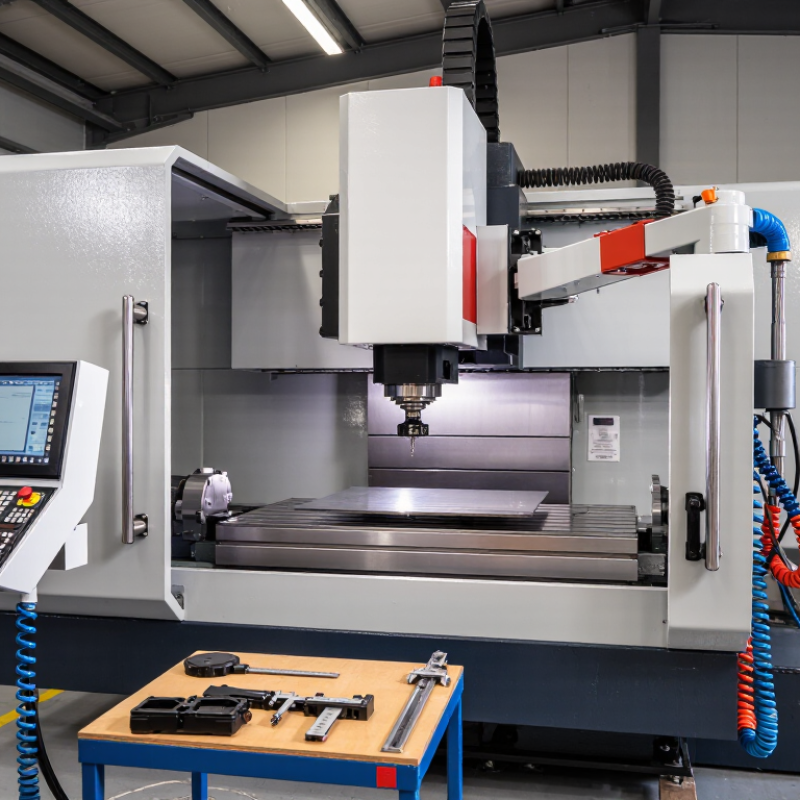
The best three-axis CNC machine depends on the material, tolerance, and production volume. A vertical machining center suits aluminum parts, steel fixtures, and repeated production work. Its rigid frame, enclosed workspace, and automatic tool changer support stable cutting. In practical shop evaluations, spindle power matters less than rigidity and reliable chip removal. A compact benchtop machine fits prototypes, teaching, and light plastics. It costs less, but its smaller work envelope limits ambitious projects.

A gantry CNC router handles plywood, plastics, foam, and large composite sheets. Its wide cutting area is useful for signs, panels, and furniture components. However, many routers struggle with heavy steel cuts and deep pockets. A high-speed spindle can create excellent surface finishes, yet it cannot replace structural stiffness. The awkward truth is simple: the fastest machine is not always the most productive. Setup time, fixturing, calibration, and operator skill often decide the real result. I would also question advertised accuracy without checking thermal stability and repeatability.

Tips: Match the machine to your hardest regular material, not your occasional project. Check the usable travel after fixturing. Test a sample part before purchase. Measure flatness, backlash, and tool deflection. Leave room for coolant, extraction, and maintenance. A machine may look impressive on paper. Your workshop conditions can expose its weaknesses.
How to Select the Best Three-Axis CNC Machine for Your Needs

Choosing the best three-axis CNC machine starts with your work, not its advertised speed. Grand View Research estimated the global CNC machine market at over 80 billion dollars in 2023, with continued growth expected through 2030. More options also mean more misleading specifications. Measure your largest part, clamping space, and tool clearance before comparing models. A machine with a 600 mm travel may lose usable space after fixtures are installed.

Match spindle power and torque to your materials. Aluminum needs different cutting behavior than stainless steel or hardened steel. For repeated production, check thermal stability, chip evacuation, automatic tool changing, and cycle consistency. The ISO 230-2 standard provides a useful framework for testing positioning accuracy and repeatability. Request recent test results, not only brochure claims. Small deviations can become expensive scrap.

Your controller and software workflow matter equally. Confirm post-processor compatibility, probing options, offline programming, and operator training. Deloitte’s 2024 Smart Manufacturing and Operations Survey found that manufacturers continue investing heavily in connected production, yet implementation challenges remain. A basic machine with dependable support may outperform a sophisticated one that waits weeks for service. Ask about spare-part lead times and preventive maintenance records. I would also calculate five-year ownership costs, including tooling, electricity, calibration, downtime, and training. This step is often skipped. It should not be. Evaluate a cutting demonstration using your actual material, tooling, and tolerances. That test may expose weaknesses no specification sheet reveals.

Essential Features, Costs, and Maintenance Considerations in 2026

In 2026, the best three-axis CNC machine balances accuracy, rigidity, operating cost, and service access. A stiff cast frame reduces vibration during aluminum or steel cutting. Precision ball screws, a reliable spindle, and closed-loop feedback improve repeatability. A tool probe and workpiece probe can reduce setup errors. Useful details matter too, including an enclosed cutting area, strong chip evacuation, and simple controller navigation.

Purchase prices vary widely by size and automation. A compact machine may cost $8,000 to $20,000, while a production-ready system can exceed $60,000. Installation, tooling, software, training, and electrical work add significant expense. Do not judge value by the machine price alone. A faster spindle is not always better. Heavy cuts may require torque, coolant control, and structural strength instead.

Maintenance determines long-term accuracy. Operators should clean chips daily, inspect lubrication lines weekly, and check backlash at planned intervals. Coolant concentration needs regular measurement, because neglected fluid can damage tools and irritate skin. Filters, belts, bearings, and cutting tools also create recurring costs. A practical test should include a dimensional inspection after several hours of cutting. Small errors often appear only when the machine warms up. One imperfect assumption remains common: expensive equipment cannot replace careful setup. A rushed fixture can ruin an otherwise accurate part.