Top Benefits of Using 5th Axis CNC Machine in 2026?
In 2026, the manufacturing sector continues to evolve, driven by advancements in technology. Among these innovations, the 5th Axis CNC Machine stands out. Its integration greatly enhances machining capabilities, allowing for more complex designs with precision. A report from the National Association of Manufacturers indicates that CNC technology can reduce production time by up to 30%.
Increased demand for customized products showcases the importance of flexibility. The 5th Axis CNC Machine offers this flexibility by enabling multi-directional milling processes. Furthermore, according to a recent study by IndustryWeek, businesses that adopted advanced CNC machining saw a 40% increase in operational efficiency. This reflects how critical it is for manufacturers to stay competitive.
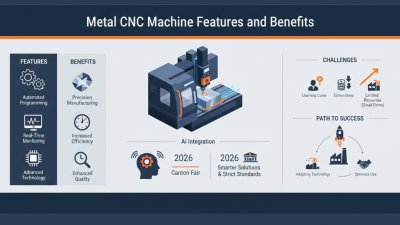
However, the shift to 5th Axis CNC technology poses challenges. Integrating these machines requires significant investment and skilled labor. Some companies may struggle to adapt. It’s crucial to approach this technology thoughtfully, ensuring sustainable growth while navigating potential risks. Overall, the benefits of the 5th Axis CNC Machine have the potential to revolutionize the industry in 2026.
Advantages of 5th Axis CNC Machines for Precision Engineering in 2026
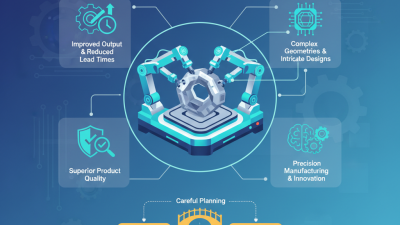
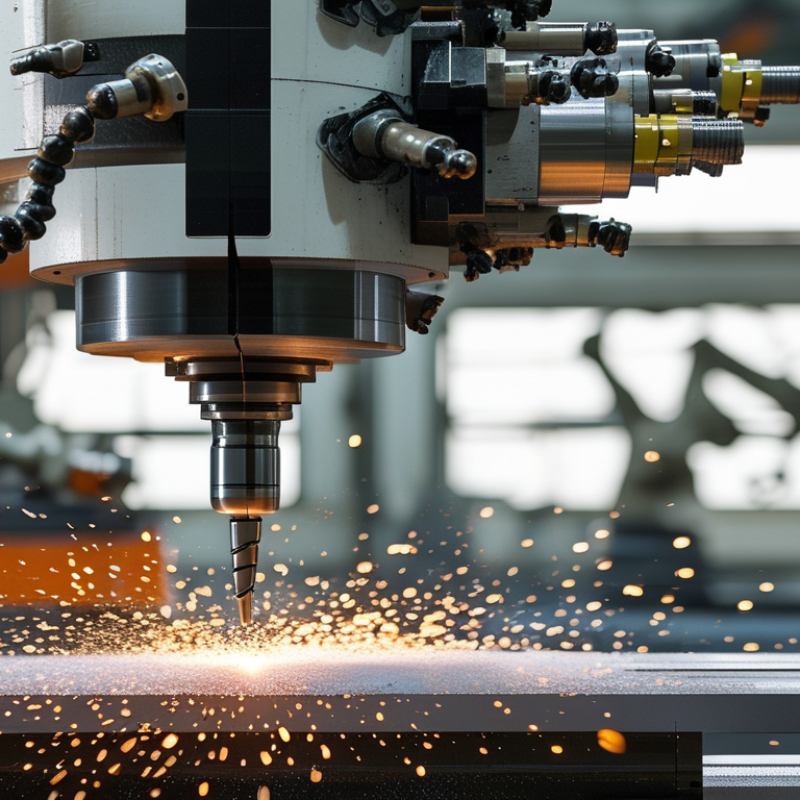
In 2026, the advantages of using 5th axis CNC machines in precision engineering have become increasingly evident. These machines offer unmatched flexibility, enabling manufacturers to create complex geometries in a single setup. According to a recent industry report, 5th axis machining can reduce processing time by up to 30%. This efficiency is crucial in fast-paced production environments where time translates directly into cost savings.
Precision is another significant benefit. With the ability to manipulate parts in multiple orientations, 5th axis machines achieve tighter tolerances. Research indicates that businesses using these machines report an improvement in dimensional accuracy by more than 15%. However, the transition to 5th axis technology can pose challenges. Companies must invest in training staff and updating workflows. This investment can be daunting, yet it is essential for realizing the full potential of advanced machining methods.
Quality control also benefits from 5th axis CNC. With enhanced machining capabilities, the need for secondary operations decreases. A study showed that reducing these steps can minimize error rates. Yet, businesses must remain vigilant. The complexity of programming these machines can lead to unforeseen issues. Emphasizing ongoing education and adapting to new technologies is vital for maintaining competitive advantage.
Enhanced Efficiency and Productivity with 5th Axis CNC Technology
The integration of 5th Axis CNC machines in modern manufacturing brings significant advancements. Enhanced efficiency stems from the ability to machine complex geometries in one setup. This reduces the need for multiple setups and minimizes human error. Consequently, manufacturers save time and resources. The precision achieved with 5th Axis technology also improves product quality, a factor that increasingly commands attention in competitive markets.
In 2026, industries are witnessing the profound impact of this technology. Labor-intensive processes are being simplified, leading to increased productivity. Workers can focus on more strategic tasks instead of mundane operations. However, the transition to 5th Axis machines may require extensive training. This can introduce a learning curve that some teams may struggle with. Adapting to new technology is not always seamless, and companies must prepare for this challenge.
Continuous improvement is essential in this context. Regular assessments of the process can highlight areas needing adjustment. Manufacturers must also evaluate equipment performance and worker proficiency. This reflective approach ensures that the benefits of 5th Axis CNC technology can be fully realized over time.
Improved Design Flexibility and Complexity using 5th Axis CNC Machines
The use of 5th axis CNC machines has transformed design flexibility in manufacturing. With their ability to manipulate parts from multiple angles, these machines significantly reduce setup time. According to a 2023 industry report, 5th axis machining can enhance production efficiency by up to 30%. This means designers can create more complex geometries without the hassles of multiple setups.
Moreover, the versatility of 5th axis machines allows for intricate shapes that were previously challenging. Parts can include features that are undercut or have complex contours. For instance, aerospace and automotive sectors utilize these capabilities to create lightweight structures. However, this sophistication can lead to challenges in programming and toolpath optimization. Errors may arise if operators lack the necessary training. The importance of skill development cannot be overstated in such a high-precision environment.
As designs become more intricate, it’s vital to balance complexity with manufacturability. While 5th axis CNC machining offers vast potential, it also requires careful planning. Design teams must collaborate closely with machinists to identify feasible solutions. The work becomes less about pushing boundaries and more about thoughtful innovation. Embracing this mindset will ensure that the benefits of advanced machining technologies are fully realized.
Cost-Effectiveness of 5th Axis CNC Machining in Modern Manufacturing
In modern manufacturing, cost-effectiveness is critical. The 5th Axis CNC machine presents an efficient solution to reduce production costs. This advanced technology enables machining from multiple angles in one setup. As a result, machining time is significantly shortened. This efficiency leads to lower labor costs and faster turnaround times.
Investing in a 5th Axis CNC machine may seem daunting initially due to high upfront costs. However, the potential savings from reduced setup times and scrap rates make it worthwhile. Companies often experience a quick return on investment. Also, using a single machine for complex parts cuts down on the need for multiple setups. This streamlining can boost overall productivity.
Many manufacturers still hesitate to adopt this technology. Concerns about the learning curve or integration into existing operations are common. Yet, with proper training and adaptation, these challenges can be overcome. Ultimately, embracing 5th Axis CNC machining can lead to long-term savings and improved efficiency in an increasingly competitive market.
Future Trends: The Role of 5th Axis CNC Machines in Industry 4.0
As Industry 4.0 evolves, the importance of 5th axis CNC machines becomes more prominent. These machines enable complex machining processes in one setup. This versatility reduces production time and minimizes errors. Companies can create intricate designs with higher precision, adapting to market demands quickly.
The integration of IoT with 5th axis CNC machines enhances monitoring capabilities. Real-time data feedback allows manufacturers to optimize operations. Yet, with this advanced technology comes a learning curve. Operators must understand both the software and hardware intricacies. There’s often a gap between expectations and reality during this transition.
Embracing 5th axis technology can also challenge traditional workflows. Teams need to adapt and rethink production strategies. Training staff is essential, but it can be resource-intensive. The long-term benefits, however, typically outweigh these initial hurdles. With careful planning, industries can harness the full potential of 5th axis CNC machines.