Leave Your Message

What Are the Top Types of Vertical Machines?

Vertical machines are built around a vertical spindle, workpiece, or operating axis. Yet the term covers more than one machine design. Depending on the industry, it may mean a vertical machining center or a vertical turning lathe. Drill presses and vertical mills may also fit, depending on spindle and workpiece orientation. Some machines remove material with rotating cutting tools. Others rotate or position a heavy workpiece for cutting. That distinction matters. Buyers should compare the machine’s purpose, work envelope, accuracy, and production needs—not just its name.

This guide surveys the top types of Vertical Machine and explains where each is commonly used. It looks at core features, typical applications, and practical trade-offs, such as setup time, floor space, and the size of parts a machine can handle. For example, a vertical machining center suits many milling tasks, while a vertical turning lathe can support large, heavy components. A vertical drill press may be a simpler choice for repeatable hole-making. Workholding, tool access, and operator skill also affect results. Real performance depends on the part, tooling, maintenance, and process—not the machine label alone. Not every shop needs the most capable option. That is worth remembering. Specifications can help narrow choices, but they do not replace a careful review of actual production requirements.
What Are the Top Types of Vertical Machines?

Vertical Machining Centers for Versatile Cutting Operations

What Are the Top Types of Vertical Machines?

Vertical Machining Centers for Versatile Cutting Operations

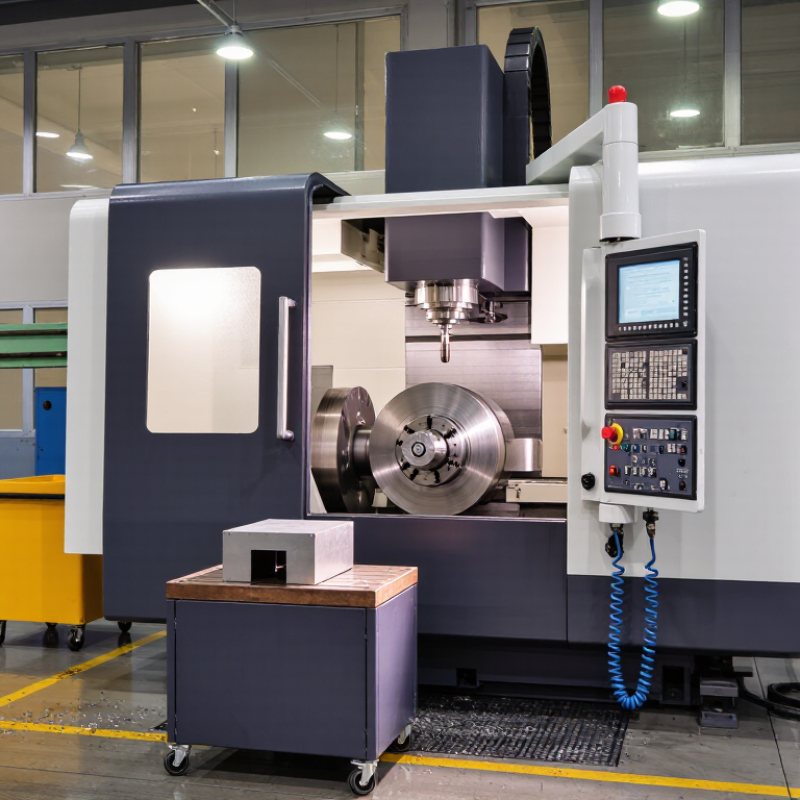
A vertical machining center (VMC) positions its spindle upright, with the tool approaching a workpiece secured to a horizontal table. This arrangement gives operators a clear view of many setups. It supports face milling, slotting, drilling, and pocketing on a single machine. Typical jobs include fixture plates, small housings, and brackets. Deep pockets need extra attention because chips can collect around the cutting area and affect the finish.

Versatility depends on more than the machine. Workholding, tool selection, and cutting parameters matter just as much. A three-axis VMC can handle many flat and prismatic features; a fourth axis can rotate parts to reach additional sides. Visibility helps. A short end mill may keep a cut stable, while a long tool can chatter against a rigid wall. Adjust feeds, speeds, and coolant to suit the material. It is not automatic.

When evaluating a VMC, consider its work envelope, spindle power, tool capacity, accuracy requirements, and operator experience. Bigger is not always better. A larger machine takes more floor space and may sit underused if the work mix is small. Review sample parts and realistic cycle times before deciding. Estimates can still miss setup delays, so revisit them after production begins. The right fit is the machine that repeatedly makes the required cuts while allowing safe loading and practical maintenance.

Vertical Lathes for Turning Large, Heavy Workpieces

Vertical lathes are designed to turn large, heavy workpieces that are awkward to support on a horizontal machine. The part sits on a horizontal rotating table, while cutting tools move across its face or along its diameter. Gravity helps keep broad castings and rings seated against the table. It matters.

This arrangement suits components such as turbine housings, flywheels, and large bearing rings. Operators can face a flat surface, cut an outside diameter, or bore an opening without repeatedly repositioning the workpiece. Before cutting, the setup should account for part weight, clamping points, table capacity, and tool clearance. A dial indicator can help check alignment and runout. Yet size alone does not guarantee accuracy; that is easy to forget.

Cutting performance depends on more than machine scale. Tool geometry, feed rate, material, and workholding all affect finish and dimensional consistency. Heavy interrupted cuts may cause vibration, especially when a casting has uneven surfaces. Watch for chatter. Secure clamping and a stable cutting path reduce risk, but they cannot correct a poorly supported part. Chip removal also deserves attention: long chips can collect near the tool or table and interrupt the cut. A careful setup takes time, and occasionally the first pass reveals an assumption that needs rechecking.

What Are the Top Types of Vertical Machines? - Vertical Lathes for Turning Large, Heavy Workpieces
Machine type Typical configuration Workpiece fit Common operations Key strengths and considerations Typical applications
Single-column vertical turning lathe One upright column supports the crossrail and tool head; the workpiece sits on a horizontal rotary table. Large-diameter parts that fit within the machine’s table and turning envelope. Facing, external and internal turning, grooving, and boring. A relatively compact layout for vertical turning. Capacity and rigidity depend on the machine’s table, column, and crossrail design. Flanges, rings, gear blanks, and other short, wide components.
Double-column vertical turning lathe Two columns support a crossrail over the rotary table; some designs have a movable crossrail. Very large or heavy workpieces, within the machine’s rated capacity and working envelope. Heavy-duty turning, facing, boring, and, where equipped, additional milling or drilling. The two-column structure can provide support for large-scale machining. It generally requires more floor space and installation planning. Large industrial rings, turbine components, heavy plates, and oversized castings.
CNC vertical turning lathe (VTL) A vertical turning platform with computer numerical control for programmed axis motion and machining cycles. Parts suited to the model’s table diameter, turning diameter, height, and load rating. Repeatable programmed turning, facing, boring, and contour machining. Supports consistent execution of complex or repeated tool paths. Programming, setup, and workholding still need to match the part and process. Production batches and precision machining of large, axisymmetric components.
Vertical turning center with live tooling A CNC vertical turning center equipped with powered tools; some models also provide a second spindle or additional axes. Parts that benefit from turning and compatible off-axis machining in one setup. Turning plus operations such as drilling, tapping, or milling, depending on machine configuration. Can reduce setup changes and workpiece transfers. Available operations vary by tooling, axis configuration, and machine specification. Flanges, valve bodies, and other parts with turned surfaces and machined holes or features.
Inverted vertical lathe The spindle is arranged above the work area, with the workpiece held from above; many designs support automated loading. Parts within the machine’s chucking, spindle, and work-zone limits; often used for smaller or medium-sized production components. CNC turning and, on equipped models, additional operations using powered tooling. Can suit automated part handling and production cells. Workpiece size and automation options are model-specific. Repeat-production components such as bearing parts, hubs, and automotive or industrial parts.
Selection note: Check the machine’s rated table load, maximum turning diameter, workpiece height, spindle torque, tooling, and foundation requirements. Actual capacity and features vary by model.

Vertical Drilling Machines for Accurate Holemaking

Vertical drilling machines use a vertical spindle and rigid worktable to produce straight, repeatable holes in plates, blocks, and other components. Accuracy starts with a square setup: clamp the work firmly, locate the hole, and select a drill suited to the material and depth. A sharp tool and steady feed help limit wandering, burrs, and excess heat.

For tighter tolerances, check spindle runout, quill play, and table alignment; small errors can accumulate. Use a pilot hole only when the material and drill geometry call for one. Measure the first hole with a bore gauge, then adjust the setup if needed. A trial cut is worth the minute. Still, shop floors are not laboratories: a chip trapped beneath a clamp can spoil careful alignment.

Energy use also deserves attention. The International Energy Agency’s Energy Efficiency 2023 report estimates that industry accounts for about 37% of global energy consumption. On a drilling station, sharp drills, sensible cycle planning, and reduced idle time can cut waste without sacrificing hole quality. Record diameter and position across a sample of parts; one acceptable hole proves little.

Vertical Boring Mills for Enlarging and Finishing Holes

Vertical boring mills enlarge and finish holes in large, heavy components, such as pump housings and turbine casings. The workpiece rests on a horizontal table and rotates beneath a cutting tool. This setup helps machinists align a bore with the component’s centerline. It also supports workpieces that are awkward to mount on conventional lathes. A mill can correct an undersized or worn bore, but the setup must be accurate. Small alignment errors can leave a tapered hole.

Rough boring removes excess material; finish boring brings the hole closer to its target size and surface quality. Operators check dimensions with bore gauges and inspect the surface between passes. Tool sharpness, vibration, and heat all affect the result. The method is not foolproof: a rigid workpiece can still shift under cutting forces. Grand View Research’s 2024 Machine Tools Market report estimated the global market at USD 86.7 billion in 2023 and projected 6.1% annual growth through 2030. That broad market figure is not specific to boring mills, but it reflects continued investment in machining equipment.

Tip: Leave a small, even finishing allowance after rough boring. Verify alignment before the final pass, and measure the bore at several depths. If readings differ, pause and check for tool deflection or workpiece movement.

Vertical Grinding Machines for Precision Surface Finishing

Vertical grinding machines use a vertically oriented wheel to finish flat faces, shoulders, and selected profiles. In many designs, the workpiece sits on a horizontal rotary table, giving the operator access to broad surfaces. This setup is useful for heavy or wide parts that are awkward to hold on smaller horizontal equipment. Stable setup matters.

Surface quality depends on more than the machine’s stated capability. Wheel type, grit, dressing condition, workpiece material, and coolant flow all affect the result. A freshly dressed wheel can cut more consistently, while a worn wheel may leave uneven marks or generate excess heat. Operators often use light finishing passes, then check the surface with suitable measuring equipment. Small details count.

Vertical grinding can produce precise finishes, but it is not an automatic fix for poor preparation. Uneven clamping may distort a thin component, and incorrect coolant delivery can affect both finish and dimensional stability. For a large face, measurements at several points can reveal variation that one reading misses. The process also takes setup time; that trade-off is easy to underestimate. Before choosing a machine, match its table size, spindle arrangement, and available measurement methods to the part’s geometry and tolerance requirements.

Top Types of Vertical Machines: Vertical Grinding for Precision Surface Finishing

Typical surface-roughness ranges (Ra) vary with material, wheel or abrasive, machine condition, and process settings. These indicative ranges are for comparison, not guaranteed specifications.

How to read: Lower Ra values indicate a smoother surface. Vertical grinding is well suited to precision finishing of large, heavy workpieces; lapping can achieve finer finishes when the application requires them.