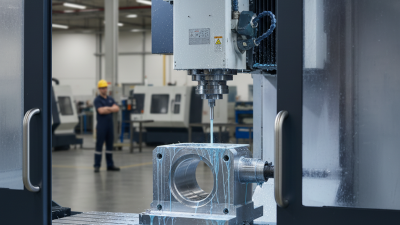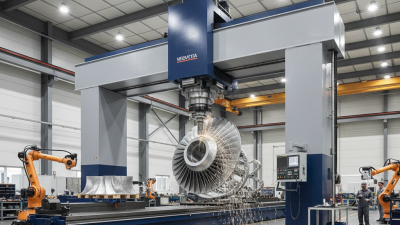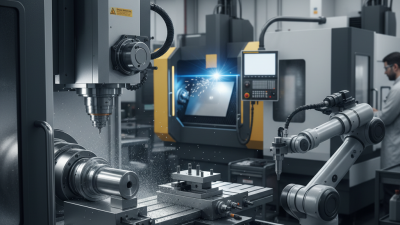
In today's manufacturing landscape, the demand for precision and efficiency is ever-growing. The Metal CNC Machine stands out as a pivotal tool in this evolution. These machines are designed to transform metal into intricate parts with remarkable accuracy. However, understanding their features and benefits is crucial for manufacturers aiming for competitive advantages.
The Metal CNC Machine integrates advanced technology to enhance production quality. Features such as automated programming and real-time monitoring streamline operations. Yet, these benefits come with a learning curve. Operators must adapt to the technology to fully leverage its capabilities. Challenges arise, especially for smaller firms with limited resources.
Moreover, the introduction of AI in events like the 2026 Canton Fair shows the industry's direction towards smarter solutions. Buyers now seek suppliers who meet strict standards. This trend highlights the importance of investing in modern manufacturing equipment like Metal CNC Machines. The path to success involves not only adopting technology but also continuously evaluating and optimizing its use.
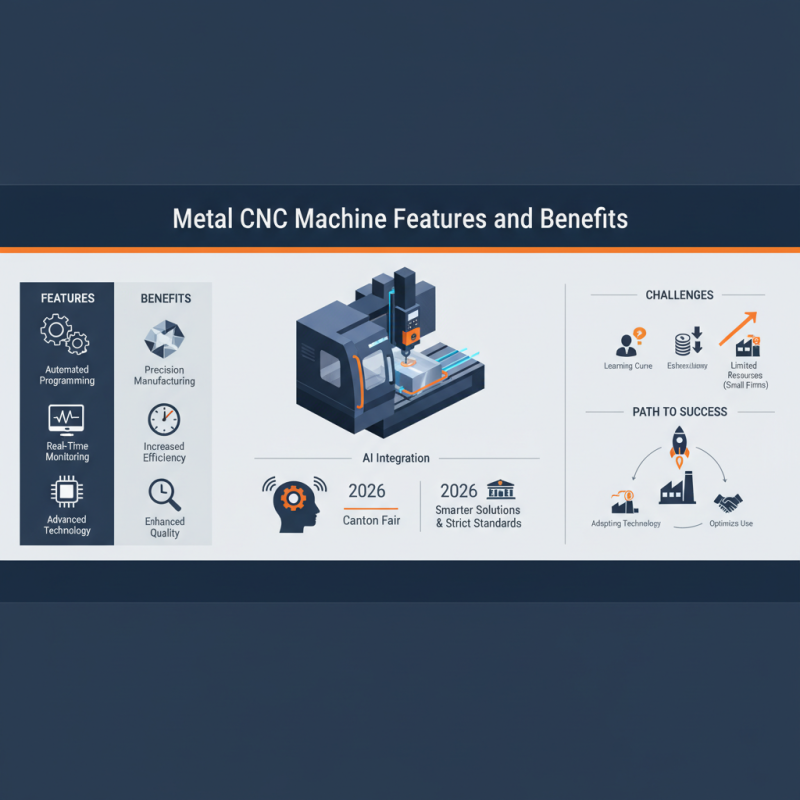
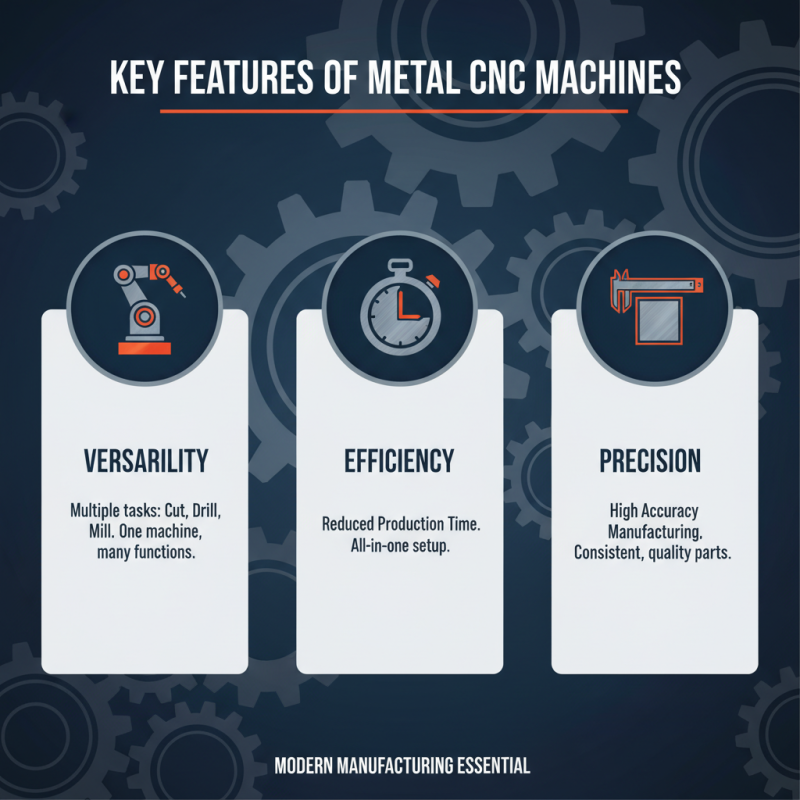
Metal CNC machines are essential in modern manufacturing. They offer a range of features that enhance productivity and precision. One key feature is their ability to perform multiple tasks. This versatility minimizes the need for several machines. Typically, CNC machines can cut, drill, and mill metal all in one setup. This efficiency reduces production time significantly.
Another critical feature is automation. According to recent industry reports, automation in CNC machining can improve productivity by up to 30%. This means higher output and reduced labor costs. However, dependence on automation can lead to skill shortages as fewer operators are needed. Over time, this might require additional investments in training and development.
Precision is a paramount concern in metal machining. CNC machines can achieve tolerances as tight as ±0.001 inches. This level of accuracy is crucial for industries like aerospace and automotive. Yet, achieving this precision consistently can be challenging. Factors like tooling wear or programming errors can affect outcomes. Regular maintenance is necessary to mitigate these issues. Despite advancements, some human oversight is still needed to ensure optimal performance.
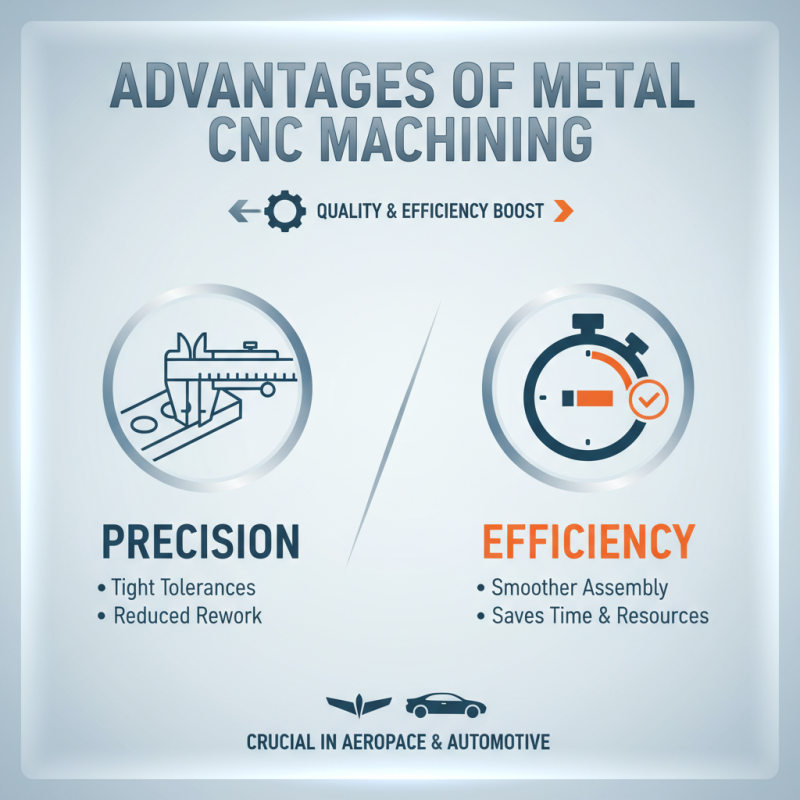
Metal CNC machining offers numerous advantages that enhance production quality and efficiency. One key benefit is precision. CNC machines can achieve incredibly tight tolerances. This precision reduces the need for rework, saving time and resources. When components fit perfectly, assembly becomes smoother. In industries like aerospace and automotive, this level of accuracy is crucial.
Another advantage lies in versatility. CNC machines can work with various metals like aluminum, steel, and titanium. This capability allows manufacturers to create diverse parts for multiple applications. It's also easier to switch from one project to another. However, this flexibility can also lead to challenges. Workers must adapt quickly, which may disrupt workflow. It's essential to train operators effectively to overcome these hurdles.
Additionally, CNC machining promotes automation. Fewer human errors occur when machines operate consistently. Still, reliance on technology can be risky. If a machine malfunctions, production halts. Regular maintenance and monitoring are necessary. Companies must invest time to ensure that machines are running smoothly to avoid delays. This balance between technology use and human oversight is vital for successful operations.
Metal CNC machines play a crucial role in enhancing precision and efficiency in various manufacturing processes. These machines utilize computer-controlled automation to perform intricate tasks. With advanced cutting capabilities, they can create detailed shapes with minimal human intervention. This reduces the chance of errors that often arise from manual operations.
Precision is essential in many industries. Metal CNC machines can achieve tight tolerances that meet rigorous standards. They ensure that each piece produced is uniform and meets design specifications. However, this reliance on technology comes with challenges. Machine calibration and maintenance are essential. Any misalignment can lead to defective parts. Operators must regularly check and adjust machines to maintain optimal performance.
Efficiency is improved through faster production cycles. Metal CNC machines can operate continuously, reducing downtime. This capability allows for higher output in shorter timeframes. Yet, it's important to consider the learning curve for operators. Training is necessary to maximize the machine’s potential. Inadequate training can result in lower efficiency and wasted resources.
Metal CNC machines have become essential in a number of industries. Their precision makes them perfect for manufacturing complex components. In automotive, for example, CNC machines create custom parts that fit seamlessly in vehicles. This precision helps ensure safety and performance.
In aerospace, the stakes are high. Machined metal parts must meet strict regulations. CNC machines can produce lightweight, sturdy components that enhance fuel efficiency. Yet, accuracy is a constant challenge. A small error can lead to major issues. These machines allow for rapid prototyping, which can speed up the design process.
The construction industry also benefits from metal CNC machines. They fabricates structural components with exact measurements. Fabricators can quickly adapt designs based on specific project needs. However, not all designs transition smoothly to CNC machining. Constant evaluation and adjustments are necessary to improve efficiency and quality. Such challenges can shape future designs and processes.
| Feature | Description | Benefits | Industry Applications |
|---|---|---|---|
| High Precision | Ability to maintain tight tolerances and intricate designs | Reduced material waste and improved product quality | Aerospace, Automotive |
| Automation | Automated operation with minimal human intervention | Increased production speed and efficiency | Manufacturing, Electronics |
| Versatility | Capability to work with various materials such as steel, aluminum, and titanium | Flexibility to cater to different industry needs | Medical Devices, Defense |
| User-Friendly Interface | Intuitive software for programming and operation | Easier for operators to learn and reduces training time | Educational institutions, Small workshops |
| Real-time Monitoring | Live data feedback and performance tracking | Quick identification of issues and maintenance needs | Heavy Industry, Aerospace |
Future trends in metal CNC machine development are shaping the industry. The integration of artificial intelligence is one significant focus. AI can enhance the precision and efficiency of machines. With smart algorithms, CNC machines learn from past tasks and improve over time. This means fewer errors and faster production cycles.
Another trend is the move towards greener technologies. Manufacturers are exploring ways to reduce waste and energy consumption. For example, new materials and processing techniques can minimize scrap. There is a growing demand for machines that are both efficient and environmentally friendly. These developments must be critically examined, as the balance between innovation and sustainability is complex.
Additive manufacturing is also gaining traction. Combining CNC machining with 3D printing opens new possibilities. It allows for more intricate designs and reduces material costs. However, this fusion presents challenges in terms of compatibility and workflow. Industries must adapt, and not all are equipped for this transition. The road ahead will require careful planning and a willingness to experiment.
This chart illustrates the evaluation of key features and benefits of metal CNC machines based on industry research. The data reflects their importance as perceived by industry professionals.