Top Gantry Machining Center Applications and Benefits for Modern Manufacturing?
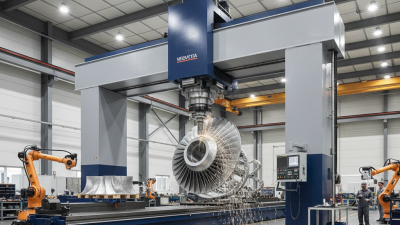
In the ever-evolving landscape of modern manufacturing, the Gantry Machining Center stands out as a game-changer. Industry expert Dr. Lisa Chang, a leading figure at Advanced Manufacturing Solutions, highlights the significance of this technology: “Gantry Machining Centers transform precision and efficiency in ways traditional methods cannot.”
These machines are not just large tools; they symbolize a shift in manufacturing capabilities. With their ability to accommodate large workpieces, they facilitate intricate designs and complex operations. The precision achieved through a Gantry Machining Center is unparalleled, addressing the growing demand for high-quality production.
However, the implementation of Gantry Machining Centers comes with challenges. Integration into existing systems can be complex. Workforce training is essential, but it requires time and resources. Despite these hurdles, the benefits, including reduced production times and enhanced accuracy, make them indispensable for competitive manufacturers today. Investing in this technology is a testament to a commitment to innovation and excellence.
Top Applications of Gantry Machining Centers in Modern Industry
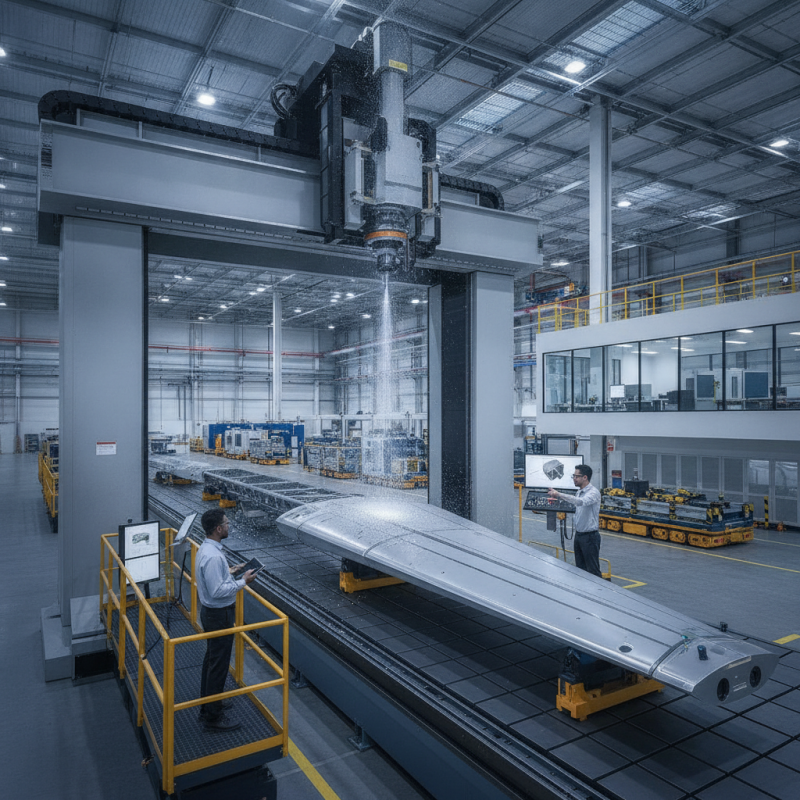
Gantry machining centers are revolutionizing modern manufacturing. They excel in industries such as aerospace, automotive, and heavy machinery. These centers handle large workpieces with precision. Their ability to move along multiple axes means they can create complex geometries efficiently. This capability is vital for producing high-quality components.
Another key application is in mold making. Gantry machines can fabricate molds with intricate details, driving efficiency in the production process. They significantly reduce production times, enabling manufacturers to meet tight deadlines. Furthermore, these machines offer flexibility in handling different materials, from metals to plastics. This versatility supports diverse manufacturing needs.
Despite their advantages, using gantry machining centers comes with challenges. Setting up the machines can be time-consuming. Operators need specialized training to maximize their potential. There might also be maintenance costs associated with their operation. Thoughtful implementation can help mitigate these issues, ensuring that manufacturers reap the full benefits of this technology.
Advantages of Using Gantry Machining Centers in Manufacturing Processes
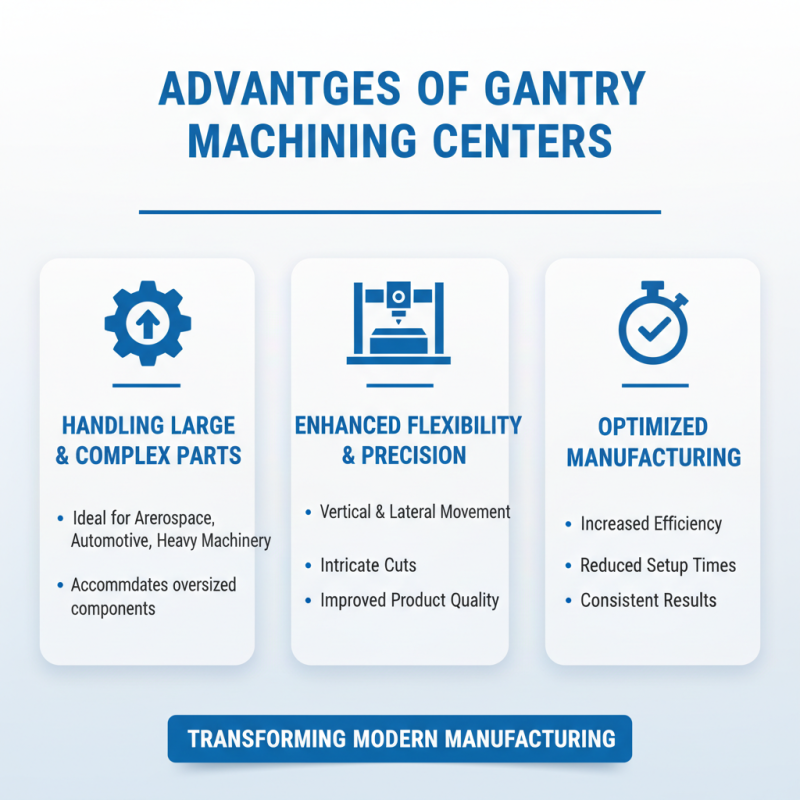
Gantry machining centers are transforming modern manufacturing with their unique capabilities. These machines excel in handling large and complex parts, making them ideal for industries such as aerospace, automotive, and heavy machinery. The design of a gantry system allows for vertical and lateral movement, providing flexibility in machining operations. This configuration enables precise and intricate cuts, leading to improved product quality.
One significant advantage is their ability to accommodate heavier workpieces. Traditional CNC machines often struggle with large components. However, gantry systems can easily support these loads, reducing the risk of deformation during machining. This reliability enhances the overall efficiency of the production process, minimizing downtime and waste.
Despite their many benefits, there are challenges to consider. Gantry machining centers require substantial floor space, often making them impractical for smaller workshops. Furthermore, the initial investment can be significant, which may deter some manufacturers. Evaluating the long-term benefits versus the initial cost is crucial for making an informed decision. Each manufacturer must assess their specific needs and production goals carefully.
Comparative Analysis: Gantry vs. Traditional Machining Centers
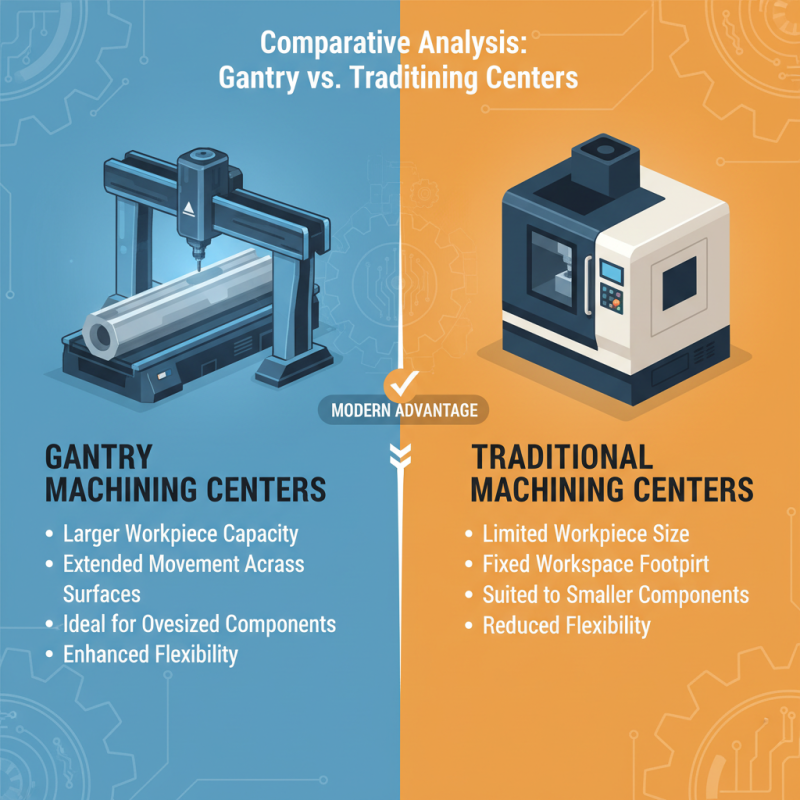
Gantry machining centers are redefining modern manufacturing. Their unique design offers significant advantages over traditional machining centers. For starters, gantry machines allow movement across larger surfaces. This flexibility enables manufacturers to handle oversized components with ease. Traditional machines often struggle with such tasks due to limited workspace.
Another key difference is rigidity. Gantry machines provide more stability, which improves precision. This is crucial when working on intricate designs. Traditional centers may face challenges in maintaining accuracy under heavy loads. The result can be additional costs from errors or rework.
**Tip:** When selecting a machining center, assess your specific production needs. Understand the size and weight of your typical workpieces.
One challenge with gantry machining is the initial investment. The cost can be higher than traditional systems. However, the long-term benefits often outweigh these costs. Consider the increase in productivity and efficiency. A careful analysis may reveal significant savings over time.
**Tip:** Look into training your team on new systems. Proper training can enhance efficiency and reduce learning curves.
In summary, while both machining centers have their merits, gantry machines excel in many modern applications. Manufacturers must carefully evaluate which system aligns best with their goals and operations.
Key Industries Leveraging Gantry Machining Technology
Gantry machining technology is making significant strides in various industries. The aerospace sector, for example, benefits tremendously from gantry machining centers. According to a recent industry report, about 35% of aerospace components are now produced using this method. The ability to handle large and complex parts efficiently is critical. Precision is paramount, as even a slight deviation can lead to costly errors.
In the construction and heavy equipment industries, gantry machining plays an important role. These operations often require machining large components, such as frames and structural parts. A survey indicated that companies using gantry machines report a 25% increase in production efficiency. However, the challenge remains in integrating this technology with existing workflows. Not all manufacturers have adapted quickly, leading to inconsistencies in output quality.
The automotive industry also taps into gantry machining technology, particularly for fabrication of chassis and engine blocks. It enables high-speed machining with excellent accuracy. Despite this, many manufacturers cite a steep learning curve and initial costs as barriers. The switch to automated gantry systems requires careful planning and staff training. Understanding these dynamics is essential for leveraging the full potential of this innovative technology.
Future Trends in Gantry Machining Center Development and Usage
The future of gantry machining centers is bright and promising. These systems are evolving rapidly, driven by advancements in automation and smart technologies. The integration of AI enhances precision while reducing human errors. This shift allows manufacturers to produce complex parts at unparalleled speeds.
As industries demand more customization, gantry systems will adapt. Their ability to handle diverse materials and geometries makes them ideal. Developing hybrid systems that combine additive and subtractive processes could become a game changer. However, challenges like high initial costs and the need for skilled operators remain.
Sustainability is also a key focus. Manufacturers must consider energy-efficient designs and the use of recyclable materials. Embracing these principles can reduce operational costs and environmental impact. The journey ahead is not without hurdles, but the potential for innovation in gantry machining centers is significant.
Top Gantry Machining Center Applications and Benefits for Modern Manufacturing