Leave Your Message
Choosing the right Aluminum Machine can shape your production speed, product quality, and long-term operating costs. It is not simply a matter of selecting the largest model. Your decision should reflect the alloy, component size, tolerances, production volume, and available workshop space. A machine cutting thin 6061 panels needs different capabilities from one producing thick aerospace brackets.
Dr. LaRoux K. Gillespie, a respected manufacturing consultant and machining educator, said, “A machine should fit the process, not force the process to fit the machine.” That principle deserves careful attention. Examine spindle speed, rigidity, feed control, chip evacuation, coolant delivery, and tooling compatibility. Ask suppliers for sample cuts using your actual aluminum grades. Watch the surface finish. Measure burr formation. Listen for vibration.
Small details matter.
A fast spindle may improve aluminum cutting, yet excessive speed can create heat, built-up edges, or unstable chips. Automation may reduce labor, but it can increase setup complexity and maintenance demands. Energy use, operator training, software support, and spare-parts access also affect the real purchase price. These factors are often overlooked during showroom demonstrations.
No buying guide is perfect. I may still underestimate unusual materials, future orders, or local service limitations. Therefore, compare verified specifications with production evidence. Request references from businesses with similar workloads. Review warranty terms carefully. The most reliable Aluminum Machine is not always the most advanced one. It is the machine that performs consistently, safely, and profitably within your actual operation.
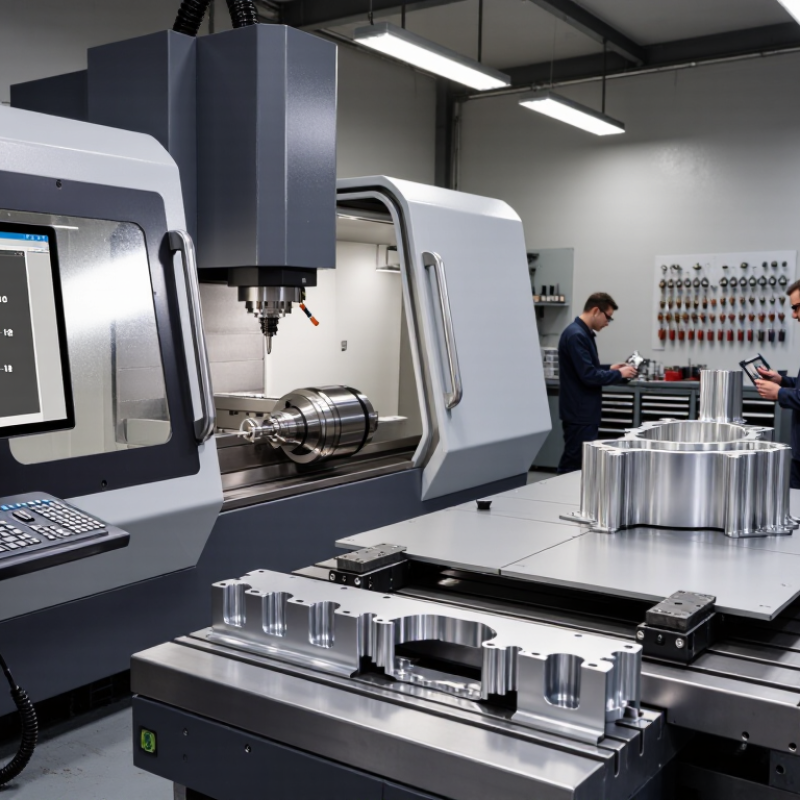
Choosing an aluminum machine starts with a clear production question: what must it make, and how often? Record alloy types, part dimensions, tolerances, surface requirements, and monthly volume. A small workshop cutting 6061 brackets needs different capacity from a factory milling long aluminum profiles. The difference matters. Measure the largest workpiece, not the average one. That overlooked detail can force expensive rework.
Define goals in numbers. Set target cycle time, acceptable scrap rate, spindle availability, and operator workload. If a part requires ±0.02 mm tolerance, verify the machine, tooling, fixturing, and inspection method together. Machine accuracy alone cannot guarantee final quality. In practical trials, chips, heat, vibration, and coolant access often expose weaknesses that brochures hide. Run sample material whenever possible. Ask whether the machine supports future orders, but avoid paying for unused capacity.
Your material choice also shapes the decision. Soft aluminum can build up on cutters, while thin walls may vibrate during finishing. Look for suitable spindle speed, rigid workholding, effective chip evacuation, and controls your team can learn reliably. A lower purchase price may become costly through longer setup times or frequent tool changes. Leave room for uncertainty; early volume forecasts are often optimistic. Review actual orders, operator skills, floor space, power supply, and maintenance support before approving specifications. A less impressive machine on paper may perform better beside your actual workbench.
Use this practical comparison to match your aluminum parts, production volume, accuracy requirements, and business objectives with the most suitable machine configuration.
| Machining Need or Business Goal | Recommended Machine Type | Typical Aluminum Applications | Suitable Production Volume | Key Technical Requirements | Expected Advantages | Important Limitations | Priority Level |
|---|---|---|---|---|---|---|---|
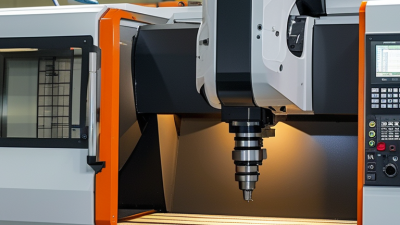
| Prototype development and frequent design changes | 3-axis CNC vertical machining center | Prototype housings, brackets, fixtures, covers, and small mechanical components | Low volume; approximately 1–100 parts per design | Rigid spindle, easy tool access, reliable CAD/CAM compatibility, and quick setup changes | Lower initial investment, flexible programming, and straightforward operator training | Requires multiple setups for complex parts with several angled surfaces | High |
| High-volume production of prismatic components | 4-axis or 5-axis CNC machining center | Automotive components, electronic enclosures, manifolds, and complex structural parts | Medium to high volume; approximately 100–10,000+ parts per year | High repeatability, automatic tool changer, probing, chip evacuation, and workholding designed for repeat production | Fewer setups, shorter handling time, improved consistency, and better machine utilization | Higher purchase cost and greater programming complexity than a basic 3-axis machine | High |
| Complex curved surfaces and multi-sided components | 5-axis CNC machining center | Impellers, aerospace-style structures, medical components, molds, and complex prototypes | Low to high volume, depending on automation and cycle time | Simultaneous multi-axis control, high-speed spindle, collision avoidance, advanced CAM, and accurate rotary-axis calibration | Fewer fixtures, improved access to difficult surfaces, and reduced repositioning errors | Higher capital cost, specialized programming requirements, and more demanding maintenance | Very High |
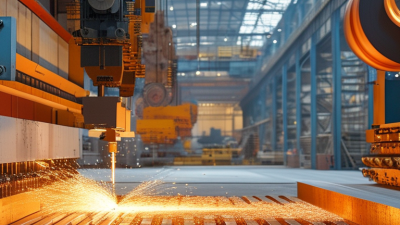
| Fast cutting of thin sheets and flat aluminum profiles | CNC fiber laser cutting machine | Sheet-metal panels, brackets, electrical cabinets, signage components, and flat profiles | Medium to high volume; suitable for repeat sheet production | Laser power matched to material thickness, stable sheet handling, nesting software, fume extraction, and automatic height control | Fast processing, narrow kerf, low mechanical force, and efficient material nesting | Does not replace milling for deep pockets, threaded holes, or three-dimensional surfaces | High |
| Cutting aluminum tubes, pipes, and structural profiles | CNC tube or profile laser cutting machine | Frames, furniture parts, heat-exchanger components, handrails, and lightweight structures | Medium to high volume | Automatic tube loading, rotary chuck or profile support, length measurement, and profile-specific cutting software | Accurate hole and contour cutting with reduced secondary operations | Machine capability depends on tube diameter, profile geometry, wall thickness, and loading method | Medium to High |
| Large plates, long profiles, or oversized workpieces | Large-format CNC router or gantry machining center | Large panels, architectural components, composite-aluminum assemblies, and long extrusions | Low to medium volume | Work envelope larger than the part, strong vacuum or mechanical fixturing, adequate gantry rigidity, and effective chip collection | Processes large parts without repeated repositioning and supports efficient panel nesting | Very large machines require substantial floor space and may offer lower rigidity than heavy-duty metal-cutting centers | Medium |
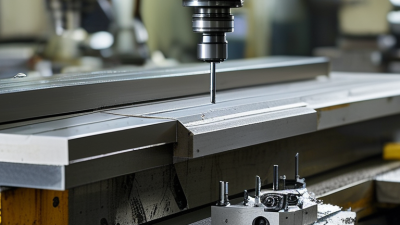
| Fine engraving, shallow trimming, and lightweight finishing | High-speed CNC router or compact CNC mill | Control panels, nameplates, decorative components, instrument faces, and small aluminum parts | Low to medium volume | High spindle speed, low runout, sharp carbide tooling, stable workholding, and controlled feed rates | Good surface finish for light cuts and relatively low operating cost | Not appropriate for heavy stock removal, deep pockets, or highly rigid production cutting | Medium |
| Unattended production and labor reduction | CNC machining center with automation | Repeat aluminum components requiring consistent loading, machining, inspection, and unloading | Medium to high volume with stable part designs | Robot or pallet system, automatic probing, tool-life monitoring, bar or part handling, and integrated safety systems | Higher machine utilization, reduced manual handling, and more consistent cycle-to-cycle production | Automation is less economical when product mix changes frequently or annual volume is low | Very High |
| Reliable dimensional accuracy for close-tolerance parts | Precision CNC machining center | Sealing surfaces, bearing housings, precision mounts, and engineered mechanical components | Low to high volume | Thermal stability, calibrated axes, probing, appropriate coolant delivery, controlled tool wear, and documented inspection procedures | Improved repeatability and reduced scrap when process control is properly maintained | Accuracy depends on the complete process, including tooling, fixturing, temperature, measurement, and operator practice | Very High |
| Low operating cost and simple maintenance | Standard 3-axis CNC mill or router | General-purpose brackets, plates, covers, jigs, and maintenance parts | Low to medium volume | Common tooling, accessible maintenance points, basic coolant or mist control, and readily available replacement components | Lower training burden, simpler troubleshooting, and broad application flexibility | May require more manual handling and additional setups for complex geometries | High |
Selection reminder: Before purchasing, confirm the maximum workpiece size, aluminum alloy, material thickness, required tolerance, surface-finish target, annual production volume, available floor space, electrical capacity, tooling strategy, operator skills, and after-sales service requirements.