China Top 10 5th Axis CNC Machine Manufacturers 2026
Choosing a 5th Axis CNC Machine is not just a matter of adding another rotary axis. Shops need a machine that holds position under load, clears the workpiece, and repeats accurately across long production runs. In 2026, Chinese manufacturers offer options for aerospace components, medical parts, molds, and other complex work. The differences are practical: spindle speed, rotary-table capacity, tool-change time, control systems, service coverage, and the quality of real-world application support.
Manufacturing scholar Dr. Yoram Koren’s research on reconfigurable manufacturing suggests a useful principle: flexibility should improve responsiveness without adding needless complexity. Put simply, it must earn its place on the shop floor. This is a paraphrase of his broader work, not a verbatim quotation. That distinction matters when comparing machines. A polished brochure cannot show how a rotary axis behaves with a heavy fixture, or how quickly technicians can resolve a fault.
This guide examines ten Chinese manufacturers through observable criteria, including machine design, configuration choices, technical documentation, and available support. Look beyond impressive travel figures. Ask for test-cut evidence, inspect sample surfaces, and confirm what is included in the quoted configuration. Small details count. Rankings also have limits: product lines change, and one machine may suit a mold shop but not a high-volume cell. The comparison aims to inform, not replace a shop-floor trial. Good choices begin with the part, the tolerance, and the people who will run the machine.
What Defines a Five-Axis CNC Machine?
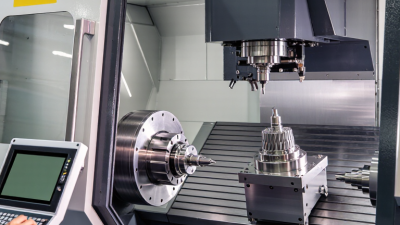
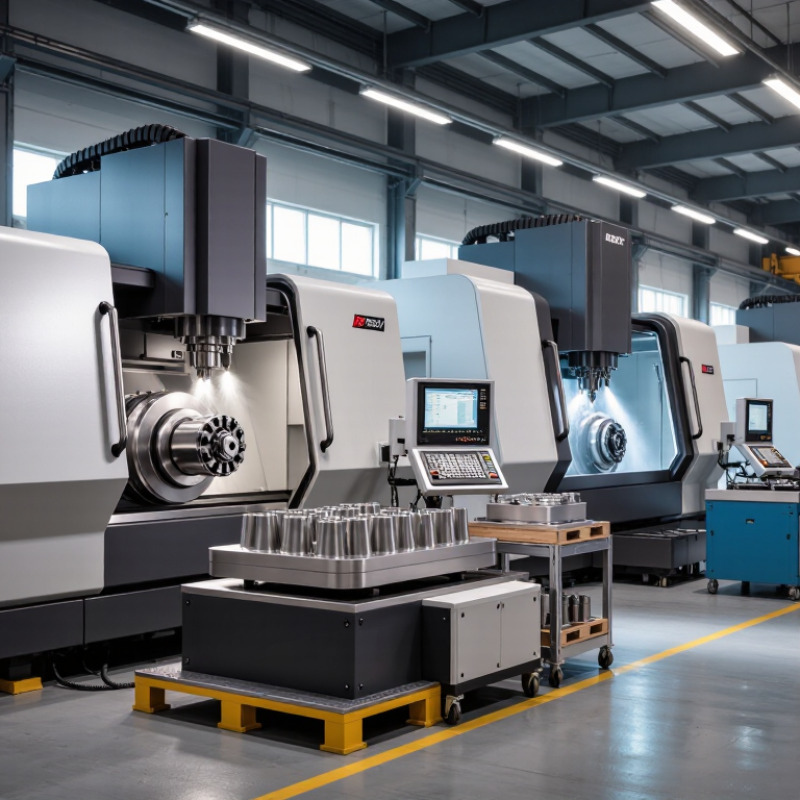
A five-axis CNC machine controls three linear motions and two rotary motions. The linear axes move the cutting tool along X, Y, and Z; rotary axes tilt or turn the tool or workpiece. Their combined movement lets the cutter approach a part from changing angles, often completing complex surfaces with fewer setups. That is the core idea.
The distinction between indexed 3+2 machining and simultaneous five-axis machining matters. In 3+2, the rotary axes position the part, then pause while cutting occurs. In simultaneous work, all five axes can move during the cut. ISO 10791-6:2014 specifies tests for feed-rate accuracy and interpolation in machining centres, useful measures when evaluating coordinated motion. ISO 230-2:2014 covers positioning accuracy and repeatability of numerically controlled axes.
More axes do not guarantee better parts. Tool length, machine stiffness, calibration, programming, and workholding still affect accuracy. A long cutter reaching around a deep pocket may vibrate, even on a capable machine. And setup still matters—sometimes more than expected. For buyers, inspect test results, axis travel, and sample parts under realistic cutting conditions. A five-axis label alone tells very little.
How China’s Five-Axis CNC Manufacturers Are Evaluated in 2026
Evaluating China’s five-axis CNC manufacturers in 2026 means testing performance, not just reading specifications. Buyers should request measured positioning accuracy, rotary-axis repeatability, thermal-drift results, and sample parts cut from comparable materials. ISO 230-2 and ISO 230-7 provide useful methods for assessing linear and rotary-axis accuracy. Ask for test conditions, not only headline numbers.
Production readiness matters. The International Federation of Robotics’ World Robotics 2024 report recorded 4,281,585 industrial robots operating worldwide in 2023, up 10% year over year. That figure reflects wider factory automation, not CNC machine quality. Still, it makes control integration, probing, tool management, and operator training practical evaluation points. A polished demo is not enough. Watch a machine finish a deep cavity, inspect the surface, then check whether the result repeats after warm-up.
Service evidence deserves equal attention: local response times, spare-part availability, software support, and documented maintenance intervals. Request a factory acceptance test using your own workpiece and tolerances. Compare cycle time with finish quality and tool wear. No scorecard is perfect; testing one part cannot predict every production shift. Even experienced buyers can overvalue impressive specifications and overlook routine support.
China’s Top 10 Five-Axis CNC Machine Manufacturers in 2026
China’s Top 10 Five-Axis CNC Machine Manufacturers in 2026
Choosing among China’s leading five-axis CNC machine manufacturers in 2026 requires more than scanning spindle speeds or travel ranges. Buyers should compare machine rigidity, rotary-axis accuracy, thermal stability, control options, and local service coverage. A compact machining center may suit intricate impellers, while a larger gantry platform can handle molds and structural parts. Ask for a test cut using your material and toolpath. Chips tell a story.
A useful top-ten comparison should distinguish proven production capability from attractive specifications. Request calibration records, sample-part measurements, and details on installation, operator training, and spare-parts response. Check whether stated accuracy refers to positioning, repeatability, or a specific test condition; these figures are not interchangeable. Rankings can be imperfect because factory needs vary and public information may be incomplete. Treat any list as a shortlist, not a verdict.
Tips: Bring a real part drawing, material grade, tolerance map, and expected yearly volume to supplier discussions. Confirm who handles commissioning and what support is available after acceptance. If possible, inspect a running machine and listen for vibration during a finishing pass. Small details matter.
Key Products and Capabilities of the Top Ten Manufacturers
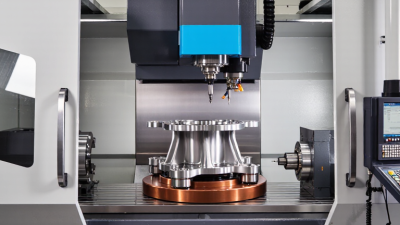
Chinese five-axis CNC manufacturers commonly offer vertical trunnion machines, horizontal machining centers, and large gantry systems. Their key differences lie in work-envelope size, spindle power, rotary-axis design, and control integration. For compact aerospace components, a trunnion table can reach several faces in one setup. Large molds may need a gantry machine, long travels, and steady thermal compensation. Fit matters more.
Look for probing, tool-length measurement, collision checks, and thermal control alongside headline accuracy. These features affect repeatability on a real shop floor. The International Federation of Robotics reported 276,288 industrial robot installations in China in 2023, 51% of global installations, in World Robotics 2024. This signals a substantial automation ecosystem, but it does not prove any individual machine’s five-axis performance. Ask manufacturers for test cuts, volumetric accuracy results, and references using similar materials. A catalogue can look impressive; rigidity under cutting load is harder to judge. Also compare service response, software training, and spare-parts access. Specifications alone leave gaps. A technically sound shortlist should match the machine’s travel, torque, and rotary-axis range to the actual part, not just its advertised application.
A five-axis CNC machine combines three linear axes (X, Y, and Z) with two rotary axes. The rotary axes may be configured as A/B, A/C, or B/C, depending on the machine design.
How to Choose a Chinese Five-Axis CNC Machine Manufacturer
Choosing a Chinese five-axis CNC machine manufacturer starts with the part, not the brochure. Share a representative drawing and ask how the machine will hold tolerance across multiple faces. Request a test cut in a similar material. A shiny demo can hide chatter, awkward tool access, or long setup times. Details matter.
Check the machine’s working envelope, rotary-axis specifications, spindle range, and thermal-control approach against your actual jobs. Ask for inspection records, calibration methods, and a sample report showing measured features. Confirm what the quoted accuracy refers to: positioning, repeatability, or finished-part results. These are not interchangeable. If possible, watch a test run remotely or visit the factory, then inspect the workpiece yourself.
Service deserves equal attention. Ask who handles installation, operator training, software configuration, and urgent troubleshooting in your region. Get expected response times and common spare-parts lead times in writing. Clarify what is included in the price, such as tooling, probes, or post-processors. I would not treat a large capacity claim as proof of suitability; the machine may still struggle with your part’s geometry. Some questions feel uncomfortable, but vague answers are a warning. Compare suppliers using the same test part, acceptance criteria, and support questions.